

Building Curtain Wall Sealing Strip

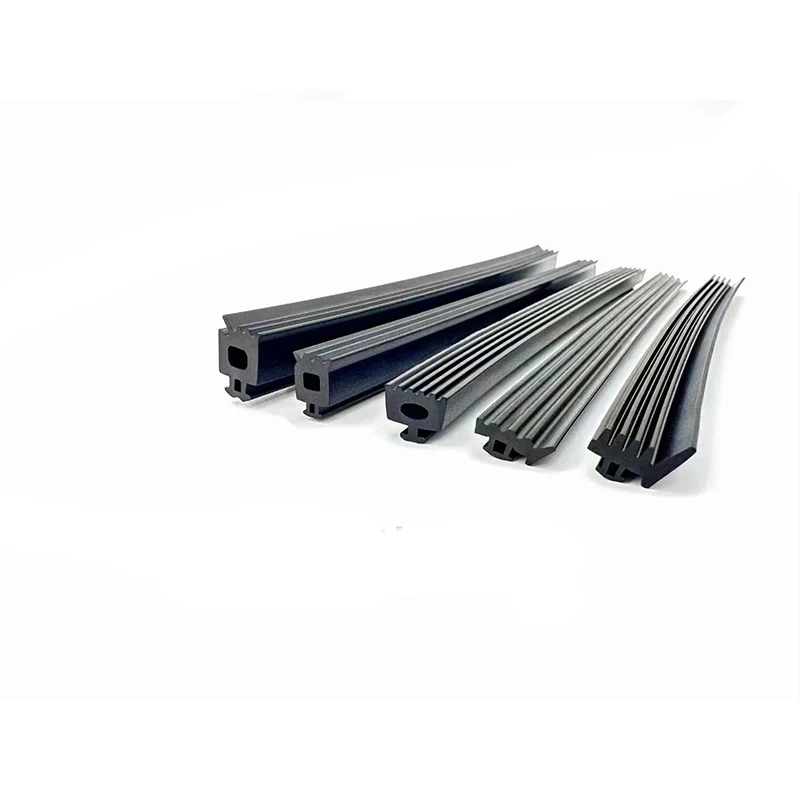
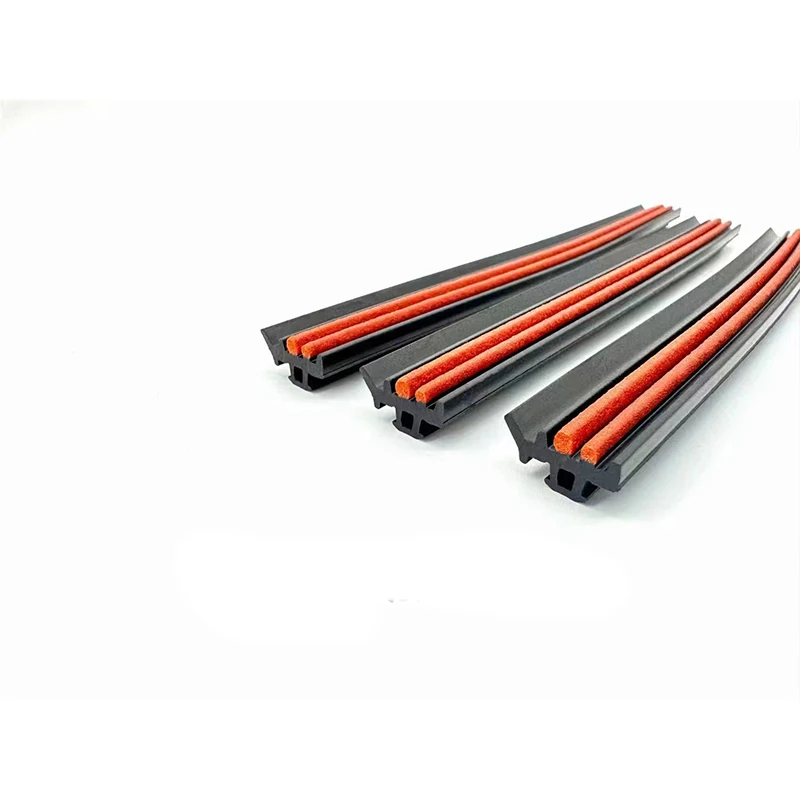
Door and window sealing strips
EPDM seal strip
Mainly used in doors and Windows, solar panels, machinery and other fields, to dust, insect, waterproof, fixed, sound insulation, shock absorption, sealing and other functions.
|
Material |
EPDM/PVC |
|
Application |
Widely used in various kinds of window and doors |
|
Installation |
excellent in flexibility and wareability to make the strip installed firmly |
|
producing technics |
Microweave Extrusion |
|
Technical datas |
|
|
Hardnesss |
Shore A 25-70 |
|
Resistant tempreture |
-40°C-120°C |
|
Tensile elongation |
≥250% |
|
Tensile strength |
≥ 6.0 Mpa |
|
Weight loss on heating |
≤3.0% |

FAQs for Building Curtain Wall Sealing Strip
1. Q: Why is EPDM the preferred material for building curtain wall sealing strips?
A: EPDM (Ethylene Propylene Diene Monomer) is the industry standard for curtain wall gaskets and seals due to its unparalleled balance of performance and longevity. Its key advantages include:
Exceptional Weathering Resistance: EPDM offers superior resistance to ozone, UV radiation, and extreme temperature cycling (-40°C to +70°C), which is critical for a building's exterior. It will not crack, shrink, or degrade over decades of exposure.
Long-Term Elasticity: It has excellent compression set resistance, meaning it maintains its sealing force and returns to its original shape after years of expansion and contraction, ensuring a permanent weathertight seal.
Water and Air Infiltration Control: The closed-cell structure provides an effective barrier against water, air, and wind-driven rain, contributing to the building's overall energy efficiency and protecting the interior structure.
2. Q: What types of sealing strips are required for a complete curtain wall system?
A: A high-performance curtain wall system utilizes several specialized sealing strips, each with a critical function:
Glazing Gaskets: These are used to seat and seal the glass panels or metal infill panels within the curtain wall framing. They accommodate thermal movement and absorb structural deflections.
Pressure Plates & Cap Seals: These work in conjunction with glazing gaskets to create a uniform pressure distribution and a finished aesthetic while providing a secondary line of defense against the elements.
Intersection Gaskets ("Zipper" or "Keeper" Gaskets): These are used to seal the joints where horizontal and vertical mullions meet, a critical detail for overall system integrity.
Perimeter Seals: Installed where the curtain wall meets the main building structure, these seals accommodate differential movement and prevent air/water infiltration at the interface.
3. Q: How do I ensure compatibility between the sealing strip and curtain wall framing materials like aluminum?
A: Ensuring material compatibility is essential to prevent galvanic corrosion and ensure adhesion. Key considerations include:
Galvanic Compatibility: EPDM and silicone are electrically neutral and are highly compatible with anodized and powder-coated aluminum frames without risk of galvanic corrosion.
Adhesive Selection: For self-adhesive seals, it is crucial to use a high-performance acrylic or silicone-based adhesive specifically tested and certified for long-term bonding to the specific coating on the aluminum substrate.
Non-Staining Formulations: Our EPDM and silicone compounds are formulated to be non-staining, preventing discoloration of light-colored or reflective curtain wall finishes.
4. Q: What performance standards and testing certifications should a curtain wall seal meet?
A: High-quality curtain wall sealing strips should be backed by rigorous testing to meet international building performance standards. Look for products tested to:
ASTM E283 (Air Infiltration)
ASTM E331 (Water Penetration)
ASTM E330 (Structural Performance)
Our seals are engineered to help curtain wall assemblies achieve high performance ratings in these tests. Additionally, many of our compounds meet UL Classifications for fire resistance and are ROHS and REACH compliant.
5. Q: Can you provide custom-extruded sealing profiles for a proprietary curtain wall system?
A: Absolutely. We specialize in custom-engineered extrusion profiles for bespoke and proprietary curtain wall designs. Our engineering support includes:
Profile Design Collaboration: We work with your design team to develop a seal that meets exact dimensional, compression, and performance requirements.
Material Compounding: We can formulate custom EPDM or silicone compounds with specific durometers (hardness), colors to match your aesthetic, and enhanced properties like fire retardancy (UL 94).
Prototyping and Testing: We provide prototypes for mock-up testing to validate performance within your full curtain wall assembly before proceeding to full production.
Hot Tags: building curtain wall sealing strip, China building curtain wall sealing strip manufacturers, suppliers, factory