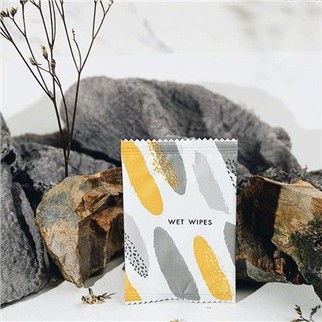
There are bacteria on the surface of various plastic products in the hospital, including pagers and mobile phones. Our hospital encourages medical staff to use commercially available disinfected wipes to clean plastic products. There is evidence that using disinfected wipes according to the guidelines can effectively reduce the number of bacteria. However, it is observed that the way medical staff use disinfection wipes is very hasty, and it only takes 1-2 seconds to wipe objects each time. In order to determine the germicidal efficacy of commercially available disinfected wipes in this wiping mode, we conducted a preliminary study to evaluate the ability of various commercially available wipes to reduce the number of bacterial colonies after wiping the plastic surface once, three times and five times.
Prepare 0.5 Maxwell turbidity (1.5) in sterile normal saline × 10 ^ 8 CFU/mL) of MRSA, VRE and Pseudomonas aeruginosa, and 2.0 McDonnell turbidity of Candida albicans. To simulate a contaminated surface, add 100 μ All bacterial suspensions of L shall be evenly marked and smeared in sterile plastic empty culture dishes (10 cm in diameter), and then dried naturally. In addition to the control dishes, wipe these dishes with the following products:
Paper towel soaked with normal saline (gently squeeze the paper towel until it no longer drips, but still remains wet);
5% ethanol wet wipes;
Moist wipes containing 14.30% isopropanol and 0.23% quaternary ammonium salt;
0.5% hydrogen peroxide wet towel
Wet wipes containing 0.5% chlorhexidine and 70% isopropanol. Wipe the whole dish surface with the same wet towel for 1, 3 or 5 times (each wet towel works for about 1 second), and let it dry for 10 minutes. Then wash the surface of the culture dish with 1mL trypsin soybean broth to resuspension the residual bacteria. Take 100 μ L bacterial suspension was inoculated on the blood agar plate by scribing and cultured at 35 ℃ for at least 24 hours, and then the colony count was conducted. All procedures were completed by a researcher. The results were analyzed by one-way ANOVA with Stata 9.0 (StataCorp, University Town, Texas).
In all experiments, the MRSA and VRE control groups had too many colonies to count on the plate, so the percentage of colony reduction compared with zero wiping was not calculated. After wiping the surface for three or five times, five kinds of wipes can kill more bacteria than wiping only once (P<0.05; n=10) (Fig. 1). Wiping the plastic surface with paper towels soaked in normal saline for three times can reduce more bacterial colonies than wiping only once, although this difference is not statistically significant.
The results showed that after wiping MRSA and VRE dishes for three or five times, the germicidal efficacy of five experimental wipes had no significant difference. After wiping once, the amount of MRSA of chlorhexidine alcohol wet wipes was significantly reduced compared with the paper towels soaked with normal saline; Compared with the paper towels soaked with normal saline, the quaternary ammonium salt compound wipes, chlorhexidine alcohol wipes and hydrogen peroxide wipes can significantly reduce the amount of VRE. (P <0.05; n=10)
Due to the low total colony count of Candida albicans and Pseudomonas aeruginosa, they were not statistically analyzed. The study found that no matter what type of wipes were used (including paper towels soaked in normal saline), the number of bacteria on the plastic surface decreased sharply with the increase of wiping times. Compared with wiping once, wiping three times can reduce the average bacterial load by 88%. When the surface is wiped for 3 times or more, the germicidal efficacy of paper towels soaked in normal saline and disinfected wipes is basically the same, which is consistent with the research results of Rutala et al.: Wiping the computer keyboard plastic keys with water containing wipes for 5 seconds can effectively reduce bacterial pollution. In this study, only when the surface is wiped once, the sterilization effect of disinfected wipes is better than that of paper towels soaked with normal saline.
Although this study was completed in the laboratory, it is believed that the experimental results can be extrapolated to the clinical environment, because the amount of bacteria inoculated in the experiment is far more than the normal bacterial concentration on the hospital plastic products. However, in order to better explore the use of cleaning and disinfection products in the medical care environment, future research should be carried out in the clinical environment to observe and compare the cleaning, disinfection and wiping methods of plastic products in hospitals.
In conclusion, the experimental results suggest that no matter what type of wipes are used to wipe the plastic surface, the bacterial load can be reduced. When the plastic surface is wiped for 3 times or more, the germicidal efficacy of the paper towel soaked with normal saline is basically the same as that of the disinfection wet towel. However, if the medical staff only wipes the plastic surface once, they should use disinfecting wipes.