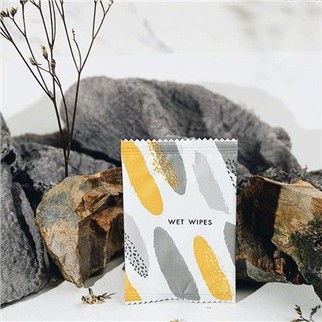
Wet Wipes OEM MOQ Explained: What You Should Know
For many new brands, retailers, and distributors, entering the wet wipes market through OEM manufacturing can seem straightforward. However, one of the most misunderstood concepts is MOQ – Minimum Order Quantity. Understanding MOQ is crucial to planning your budget, inventory, and product strategy effectively.
OEM wet wipes manufacturers set MOQs to balance production efficiency, cost management, and supply chain stability. Misinterpreting MOQ can lead to wasted investment, delays, or quality compromises. This guide explains everything you need to know about wet wipes OEM MOQ, why it exists, how it's determined, and strategies to optimize your order size without sacrificing quality or profitability.
What Is MOQ in OEM Wet Wipes Manufacturing?
MOQ stands for Minimum Order Quantity-the smallest quantity of wet wipes that a manufacturer is willing to produce in one order. It ensures that the production line runs efficiently and that fixed costs, such as setup, raw material sourcing, and labor, are justified.
For wet wipes, MOQs can vary depending on:
Wipe type (baby, disinfectant, flushable, personal care)
Packaging format (flow pack, canister, sachet)
Customization level (logo printing, formulation, fragrance)
Fabric type and thickness
Why Manufacturers Set MOQ
OEM manufacturers set MOQ to manage:
1. Production Efficiency
Wet wipes production involves continuous processes like:
Nonwoven fabric cutting and folding
Liquid saturation
Automated packaging
Running these lines for very small orders is inefficient and increases unit cost.
2. Raw Material Sourcing
Factories purchase large quantities of:
Nonwoven rolls
Liquid ingredients
Packaging materials
MOQ ensures that these materials are used efficiently and reduces waste.
3. Cost Recovery
Setup costs for machines, molds, printing, and quality testing are largely fixed. MOQ ensures that the unit cost covers these expenses.
4. Quality Consistency
Producing below the MOQ can compromise process control, affecting wet wipe quality and uniformity.
Typical MOQ Ranges for Wet Wipes
Standard Consumer Wet Wipes
Flow packs: 5,000–20,000 packs per SKU
Common for baby wipes, personal hygiene wipes
Alcohol / Disinfectant Wipes
MOQ higher: 10,000–30,000 packs
Due to specialized ingredients and safety regulations
Flushable Wipes
Higher MOQ: 15,000–30,000 packs
Specialized nonwoven fabrics and compliance testing required
Single-Use Sachet Wipes
Highest MOQ: 20,000–50,000 units
Complex packaging increases production cost
Factors Influencing MOQ
1. Customization Level
Fully branded printed packs → higher MOQ
Standard packaging → lower MOQ
Customized formula (alcohol %, lotion, fragrance) → increases MOQ
2. Fabric Type and Weight
Specialty biodegradable or plant-based fibers → higher MOQ
Standard spunlace nonwoven → lower MOQ
3. Production Line Capacity
High-speed automated lines → optimized for bulk production
Manual or semi-automatic lines → smaller MOQ possible
4. Market & Regulatory Requirements
Exporting to EU/US may require extra testing → higher MOQ
Local sales may allow more flexibility
How OEM Factories Calculate MOQ
MOQs are usually derived from:
Production Efficiency – number of wipes per roll or per machine run
Material Usage – roll length, liquid volume, packaging sheets
Setup Costs – printing plates, mixing tanks, sealing molds
Profit Margin Target – ensures factory profitability
Example:
A flow pack line produces 5,000–10,000 packs efficiently per batch
Printing full-color branded film may require 10,000 packs minimum to justify the setup
Liquid formulation batch size may be 500–1,000 liters, aligning with MOQ
Tips to Optimize MOQ as a Buyer
1. Use Standard Materials & Sizes
Avoid niche fabrics or unusual wipe sizes initially
Reduces MOQ and cost per unit
2. Start with Standard Formulations
Fragrance-free or simple lotion formulas are easier to produce
Allows smaller trial orders
3. Negotiate with Flexible OEMs
Some manufacturers may lower MOQ for first-time buyers if you agree to future volume growth
4. Consolidate Orders
Combine multiple SKUs in one batch if possible
Reduces total MOQ impact
5. Consider Private Label Packs
Using existing stock or partially branded packs can reduce MOQ
MOQ vs Cost: How They Affect Pricing
Larger MOQs generally reduce unit cost due to economies of scale
Smaller MOQs may increase per-unit cost because setup, labor, and material waste are spread over fewer units
Example:
| Order Size | Unit Price | Notes |
|---|---|---|
| 5,000 packs | $0.35 | High unit cost due to setup |
| 20,000 packs | $0.25 | Efficient use of materials and labor |
| 50,000 packs | $0.20 | Best cost efficiency for bulk |
Understanding this relationship helps buyers balance initial investment with long-term profitability.
Questions to Ask Your OEM Factory About MOQ
What is your MOQ for my target product?
Can I reduce MOQ if I use standard packaging or formulations?
How does customization affect MOQ?
Can multiple SKUs be combined to meet MOQ?
How does MOQ affect unit pricing and production schedule?
A reliable OEM will answer these questions transparently.
Common Mistakes Buyers Make About MOQ
Assuming MOQ is fixed and non-negotiable
Overlooking the impact of customization on MOQ
Ignoring shipping and inventory costs when ordering large MOQ
Choosing a low-MOQ factory without quality assurance
Avoiding these mistakes ensures smoother production and supply chain management.
Factory Selection Tips Based on MOQ
Choose a factory with flexible MOQ options for trial orders
Verify that MOQs align with your budget and storage capacity
Assess factory communication and willingness to explain MOQ logic
Prioritize factories with proven export and quality track record
Benefits of Understanding OEM MOQ
Better budgeting and cash flow planning
Ability to test products without excessive risk
Improved negotiation with factories
Reduced inventory waste
Understanding MOQ is not just about numbers-it affects every aspect of your wet wipes business strategy.
Frequently Asked Questions (FAQ)
Q1: Can I start with a small MOQ for a new brand?
Yes, if the OEM has flexible options or uses standard materials.
Q2: Does higher MOQ always mean better quality?
Not necessarily, but higher MOQ usually ensures production efficiency and consistent quality.
Q3: How does customization affect MOQ?
Custom packaging, formula, or fabric usually increases MOQ to cover setup costs.
Q4: Can I combine different SKUs to meet MOQ?
Many manufacturers allow consolidation if production line setup is compatible.
Q5: Is MOQ negotiable for long-term clients?
Yes, factories often lower MOQ once a client demonstrates growth potential.
Conclusion
Understanding OEM wet wipes MOQ is critical for planning your product launch, controlling costs, and managing inventory. By knowing why MOQ exists, how it is calculated, and how to optimize it, you can make informed decisions and partner with the right manufacturer.
MOQ is not a limitation-it is a tool to ensure efficient production, consistent quality, and predictable pricing. Smart buyers leverage MOQ knowledge to balance initial investment with long-term scalability.
Call to Action
If you are looking for a professional OEM wet wipes manufacturer with flexible MOQ, transparent pricing, and high-quality production,
Nice Wet Wipe is ready to help.
📩 Contact us today to discuss your project, request samples, and learn how to start producing private label wet wipes efficiently.