


"100% Flushable" and "100% Biodegradable" Are Two Different Tests, and One Can Fail the Other
A body wipe that carries both claims is asking the substrate to do two things that pull in opposite directions. Flushability requires the sheet to disperse quickly under the mechanical shear of a drain line-the GD4 slosh box test asks for at least 60% of the starting mass to pass through a 12.5 mm sieve within 60 minutes[reference:0][reference:1]. Biodegradability requires the material to be broken down by microorganisms within a defined timeframe-OECD 301B ready biodegradability looks for ≥60% conversion within 28 days, while EN 13432 compostability looks for ≥90% conversion within six months[reference:2]. A wipe can disperse into pieces that pass a sieve and still leave non-biodegradable fragments in the sludge; a wipe can be fully biodegradable in compost and still fail to disperse fast enough for a sewer system.
We produce OEM 100% flushable biodegradable body wet wipes for skin cleansing on pulp-based dispersible nonwoven substrates-Wetlace hydroentangled pulp or multi-ply dispersible webs-with no plastic fraction, so the substrate sits outside the UK 2027 plastic wet-wipe ban and the EU single-use plastics marking requirement. The lotion is pH 5.0–6.0, alcohol-free, and formulated for rinse-free body cleansing. This page is a procurement guide to the dual-claim architecture: which GD4 test governs flushability, which biodegradation standard governs the compost claim, and where the two standards diverge. For the compostable certification route without the flushability claim, the Biodegradable Wet Wipes page covers that separately; for the incontinence-specific pH and wet-strength specification, see Incontinence Wet Wipes.
The Dual Claim Split: Flushability Is a Drain-Line Property, Biodegradability Is a Biological Property
Flushable (GD4)
The question GD4 answers is whether the wipe will clear the toilet trapway, move through the drain line without catching, and reach the wastewater treatment plant without contributing to a pump blockage or a sewer clog. It is a mechanical and hydraulic test suite, not a biological one. A wipe can pass GD4 dispersion and still contain a synthetic binder that does not biodegrade in the sludge.
Biodegradable (OECD 301B / EN 13432)
The question OECD 301B and EN 13432 answer is whether microorganisms can convert the material's carbon into CO₂ within a defined window. OECD 301B is a ready-biodegradability screen at 28 days; EN 13432 is a compostability standard at six months. A wipe can be fully biodegradable in an industrial compost environment and still be too slow to disperse in a drain line within 60 minutes.
The practical consequence for a buyer is that a supplier claiming both attributes should be able to produce two separate documents: a GD4 test report on the finished wipe, and a biodegradation report on the substrate and the finished lotion. A single "biodegradable" certificate does not establish flushability, and a GD4 pass does not establish that the dispersed fragments will biodegrade in the sludge. The EU Green Claims Directive and the US state-level WIPPES-style rules are converging on the principle that "flushable" and "biodegradable" must each be independently substantiated rather than treated as interchangeable eco-descriptors[reference:3].
What the GD4 (2018) Test Suite Actually Measures
GD4 replaced GD3 with a stricter pass criterion on two of the seven tests: the slosh box dispersion time dropped from 180 minutes to 60 minutes, the required percentage of material passing the 12.5 mm sieve rose from 25% to 60%, and the municipal pump test power-increase ceiling fell from 15% to 5%[reference:4][reference:5]. Those three changes are what separate a genuinely flushable substrate from a sheet that merely breaks into visible pieces after three hours of agitation.
| GD4 Test | GD3 Requirement | GD4 Requirement | What It Simulates | Buyer's Check |
|---|---|---|---|---|
| Slosh box dispersion | 180 minutes agitation | 60 minutes agitation; ≥60% through 12.5 mm sieve | The mechanical shear and turbulence a wipe meets after flushing | Report must show ≥60% pass-through at 60 min, not an endpoint at 180 min |
| Municipal pump test | ≤15% average power increase | ≤5% average power increase | Whether dispersed wipes load a wastewater pump beyond its normal operating envelope | Pump power increase and test duration both reported |
| Settling / drain-line clearance | 1 hour settling | 30 minutes settling; drain-line clearance verified | Whether the wipe clears the toilet trapway and does not settle in a low-flow section | Clearance test on the specified sheet size, not a smaller lab coupon |
| Aerobic biodegradation | Included | Included alongside anaerobic | Whether the dispersed material biodegrades in the treatment plant's aerobic and anaerobic zones | Both aerobic and anaerobic results, not only one |
The 60-minute / 60% criterion is the number that separates marketing from testing. A wipe that disperses fully after three hours of agitation can still be sold as "flushable" under an older interpretation, but it does not meet GD4. If a supplier's report shows a 180-minute endpoint or a 25% pass-through figure, the substrate is a GD3-grade material, not a GD4-compliant one. The buyer should ask for the test date and the edition referenced, because a report issued before May 2018 cannot be a GD4 report.
Substrate Technology: How a Sheet Holds Together in the Hand and Falls Apart in the Drain
Pulp-Based Wetlace (Hydroentangled)
A wetlaid pulp web hydroentangled with a small fraction of short-cut fibers, without a latex binder or a synthetic reinforcing scrim. The pulp provides rapid dispersion and full biodegradability; the hydroentanglement provides enough wet strength for a body-cleansing pass. This is the mainstream route for a GD4-compliant body wipe, and the substrate we specify when the flushability and biodegradability claims must both hold.
Multi-Ply Dispersible Web (Thermal/Mechanical Bonded)
Two or more hydroentangled webs, each 20–100 gsm, with 50–95% wood pulp and 5–50% short-cut fibers, joined by thermal or mechanical embossing rather than a chemical binder. The bonding points provide in-use strength while allowing the plies to separate and disperse under agitation. Reports on this architecture show 50–100% pass-through in as little as five minutes, which is well inside the GD4 60-minute window[reference:6].
Redispersible MFC / Natural Fiber Blend
A newer route built on redispersible microfibrillated cellulose, natural fibers, and a binder system that is designed to release under flush conditions. The technology is positioned as a near drop-in for existing wetlaid lines and aims to deliver higher wet strength than conventional flushable substrates while still meeting GD4 and IWSFG dispersion benchmarks[reference:7]. It is a specification to watch for programmes that need a stronger sheet without a plastic fraction.
The common thread is the absence of a permanent synthetic binder or a polyester reinforcing scrim. A conventional spunlace viscose/polyester blend holds together because the polyester fibers entangle and do not disperse; that is why it can meet a wet-strength target and still fail GD4. A dispersible substrate holds together through hydrogen bonding, mechanical entanglement, and embossing points that are designed to break under drain-line shear. The buyer's specification should name the substrate architecture, not only the gsm and the fiber content, because the architecture is what determines whether the sheet can pass both the hand-feel and the flush test.
Technical Specifications
| Parameter | Specification |
|---|---|
| Product Type | OEM 100% flushable biodegradable body wet wipes for skin cleansing |
| Substrate Architecture | Pulp-based Wetlace hydroentangled; multi-ply dispersible web; or redispersible MFC blend; no polyester scrim, no permanent synthetic binder |
| Fiber Composition | 50–95% wood pulp with 5–50% short-cut natural or man-made cellulose fibers; 100% plant-based, plastic-free |
| Fabric Weight | 40–80 gsm (dispersible range; heavier body-wipe formats 55–80 gsm) |
| Sheet Size | 15 × 20 cm / 18 × 20 cm / 20 × 30 cm; custom dimensions |
| Wet Strength (in-use) | ≥2.5 N/25 mm MD on the finished saturated sheet; sufficient for a body-cleansing pass without tearing |
| Flushability Standard | INDA/EDANA GD4 (2018) seven-test suite; ≥60% through 12.5 mm sieve at 60 min slosh box |
| Biodegradability Standard | OECD 301B ready biodegradability ≥60% at 28 days; EN 13432 compostability ≥90% at 6 months where a compost claim is made |
| Lotion pH | 5.0–6.0 |
| Alcohol / Parabens | Free |
| Preservation | ISO 11930 challenge-tested on the finished saturated wipe |
| Packaging | Soft pack with resealable sticker or flip-top lid; 40 / 60 / 80 / 100 ct; refill pack |
| MOQ | From 1 × 40HQ container per SKU for standard formats |
| Manufacturing Standards | ISO 9001 / GMP-aligned; FSC-certified pulp available |
The wet-strength and flushability targets are the two numbers that have to be confirmed together. A sheet that hits ≥2.5 N/25 mm in the hand but only reaches 30% pass-through at 60 minutes is a non-compliant substrate; a sheet that disperses fully but tears during a body-cleansing pass is a use-failure. The specification should name both values and the test method for each, and the GD4 report should be on the finished saturated wipe rather than a lab coupon at a different gsm.
Where the Dual-Claim Body Wipe Fits: Adult Care, Post-Workout, and Travel
Adult Care and Limited Mobility
The adult-care segment is the fastest-growing consumer group in the flushable wipes category, driven by ageing populations in North America, Europe, Japan, and South Korea[reference:8]. A flushable body wipe allows a caregiver to cleanse and dispose of the wipe through the toilet rather than a general-waste bin, which matters in a home-care setting where waste volume and odour are practical concerns. The 20 × 30 cm format at 55–80 gsm covers a torso section or a limb in one or two passes, and the pH 5.0–6.0 lotion is compatible with per-change cleansing without the higher wet-strength demand of a dedicated incontinence wipe.
Post-Workout, Travel, and Festival Use
For a full-body refresh where a shower is not immediately available, the flushable format removes the disposal question that a conventional body wipe raises in a gym, a campsite, or a festival. The wipe is used once, flushed, and does not add to the waste stream a traveller or an event organiser has to manage. The pack format for this channel is typically a 40–60 count soft pack, with a smaller 15–25 count travel pack for a gym bag or carry-on.
For the incontinence-specific pH buffer and wet-strength grading, the Incontinence Wet Wipes page covers the urine-alkalinity and faecal-cleansing parameters. For the care-setting pack workflow and bed-bath sizing, see Care Wet Wipes. For the compostability certification route without the flushability claim, the Biodegradable Wet Wipes page addresses the EN 13432 and home-compost distinction.
The UK 2027 Ban and the EU Green Claims Directive: Why Substrate Proof Is Now a Market-Access Document
The UK ban on plastic-containing wet wipes takes effect in England on 19 May 2027, with Scotland, Wales, and Northern Ireland having committed to align during 2026[reference:9]. The ban targets the plastic fraction in the substrate, not the word "flushable" alone. A body wipe built on a 100% plant-based, plastic-free dispersible substrate is outside the scope of the plastic ban, but that does not automatically make the flushable claim safe: UK water companies have publicly stated that even plastic-free "flushable" wipes should not be labelled flushable if they still contribute to blockages. The practical consequence is that a UK-bound programme needs both the plastic-free substrate certificate and the GD4 report, because the first addresses the ban and the second addresses the sewer-blockage objection.
On the EU side, the Green Claims Directive requires environmental marketing claims to be substantiated with independent third-party validation and traceable documentation[reference:11]. A "100% flushable and biodegradable" claim on a body wipe therefore needs two separate evidence streams: the GD4 report for flushability and the OECD 301B or EN 13432 report for biodegradability. A single certificate for the raw pulp does not cover the finished saturated wipe, because the lotion and the converting process can change both the dispersion behaviour and the biodegradation profile.
"100% flushable" on a pack should mean GD4 on the finished wipe, not a substrate data sheet. A pulp supplier's GD4 report for a 50 gsm lab web does not establish that a 70 gsm finished body wipe with a lotion load passes the same test. The dispersion behaviour changes with gsm, lotion pickup, and embossing pattern. The buyer should request the GD4 report for the finished construction being purchased, not the raw material grade.
OEM, Documentation, and Order Details
What We Customize
- Substrate architecture: pulp-based Wetlace, multi-ply dispersible web, or redispersible MFC blend
- Fiber composition: 100% plant-based, FSC-certified pulp available
- Sheet size: 15 × 20 cm to 20 × 30 cm, or custom
- Lotion: pH 5.0–6.0, alcohol-free, rinse-free body-cleansing base
- Packaging: soft pack, flip-top lid, or refill pack; 40–100 count
- Claim set: flushable (GD4) and biodegradable (OECD 301B / EN 13432) documented as two separate evidence streams
Order Reference
- MOQ: from 1 × 40HQ container per SKU for standard formats
- Samples: specification-matched samples against your target gsm and lotion load, with the GD4 and biodegradation report for that construction
- Documentation: GD4 seven-test report on the finished saturated wipe; OECD 301B report for the substrate and lotion; EN 13432 certificate if a compost claim is added; plastic-free declaration for UK-bound programmes; ISO 11930 challenge test
- Production time: first order typically several weeks after sample and documentation approval; repeat orders shorter
- Quality control: incoming substrate gsm and fiber composition, lotion pH per batch, wet strength on the finished saturated sheet, seal integrity, and finished-pack count
If the pack will carry both "100% flushable" and "100% biodegradable," include the exact wording and the destination market so the two documentation streams are confirmed against the claim. A GD4 report and an OECD 301B report are not interchangeable, and a programme that carries both claims should be able to show both to a retailer or a water company without relying on a single certificate to cover both.
Frequently Asked Questions
No, and the two properties are measured by different standards. Biodegradability (OECD 301B at 28 days, or EN 13432 at six months) asks whether microorganisms can convert the material's carbon into CO₂ within a defined timeframe. Flushability (GD4) asks whether the sheet disperses through a 12.5 mm sieve within 60 minutes under slosh-box agitation and does not raise municipal pump power by more than 5%. A sheet can be fully biodegradable in compost and still be too slow to disperse in a drain line, or pass GD4 dispersion and contain a binder that biodegrades slowly in sludge. The pack carrying both claims should have two separate reports, not one certificate used for both.
GD4 (published May 2018) tightened three pass criteria that GD3 left looser. The slosh box dispersion time dropped from 180 minutes to 60 minutes, the required percentage of material passing through the 12.5 mm sieve rose from 25% to 60%, and the municipal pump test power-increase ceiling fell from an average of 15% to 5%. A substrate that passes GD3 under the old criteria-full dispersion after three hours, 25% pass-through-does not meet GD4. When reviewing a supplier's flushability report, the buyer should confirm the edition referenced and the test date; a report issued before May 2018 cannot be a GD4 report.
The ban targets wet wipes containing plastic fibers, not plastic-free substrates. A 100% plant-based dispersible wipe is outside the scope of the plastic ban. However, UK water companies have stated that even plastic-free wipes should not be labelled "flushable" if they still contribute to sewer blockages, so the plastic-free certificate alone does not settle the flushable claim. A UK-bound programme should carry both the plastic-free substrate declaration and the GD4 report on the finished wipe. The ban takes effect in England on 19 May 2027, with Scotland, Wales, and Northern Ireland aligning during 2026.
The balance is achieved through the substrate architecture rather than a single fiber choice. A pulp-based Wetlace or multi-ply dispersible web holds together through hydrogen bonding, mechanical entanglement, and embossing points, without a permanent synthetic binder or a polyester scrim. The embossing points provide the in-use strength a body-cleansing pass needs, while the pulp fraction and the absence of a chemical binder allow the sheet to separate and disperse under the shear of the slosh box. Multi-ply dispersible constructions have reported 50–100% pass-through in as little as five minutes, well inside the GD4 60-minute window. A conventional spunlace viscose/polyester blend holds together because the polyester fibers entangle permanently, which is why it can meet a wet-strength target and still fail GD4.
For a body-cleansing pass on a 15 × 20 cm to 20 × 30 cm sheet at 55–80 gsm, a wet tensile strength of around ≥2.5 N/25 mm machine direction on the finished saturated sheet is a workable floor-enough to survive a torso or limb pass without tearing, while remaining within the strength range that dispersible substrates can achieve without a permanent binder. A heavier incontinence-specific wipe may target a higher value, but that specification sits on a different substrate architecture and may not carry the flushable claim. The wet-strength target and the GD4 dispersion result should be confirmed on the same finished construction, not on two different lab samples.
Ask for the GD4 seven-test report on the finished saturated wipe at the purchased gsm and lotion load, with the test date and edition identified. Ask for an OECD 301B ready-biodegradability report for the substrate and lotion, or an EN 13432 certificate if the pack also carries a compost claim. Ask for a plastic-free declaration covering the substrate and the pack film for UK-bound programmes. Ask for the ISO 11930 challenge test on the finished wipe. The documentation should identify the construction tested-gsm, fiber blend, embossing pattern, lotion load-because a report for a different construction does not substantiate the claim on the pack being purchased.
Send Your Substrate Architecture, Claim Set and Destination Market for a Matched Quote
Tell us whether the pack will carry flushable, biodegradable, compostable, or a combination; the sheet size and gsm you have in mind; the pack format and count; the estimated quantity; and the destination market. We will reply with a substrate specification that matches the dual-claim architecture, the GD4 and biodegradation documentation for that construction, and a sample arrangement.
Get a Flushable Biodegradable Body Wipe Quote
If the pack will carry both "100% flushable" and "100% biodegradable," include the exact wording so the two documentation streams are confirmed against the claim before sampling.
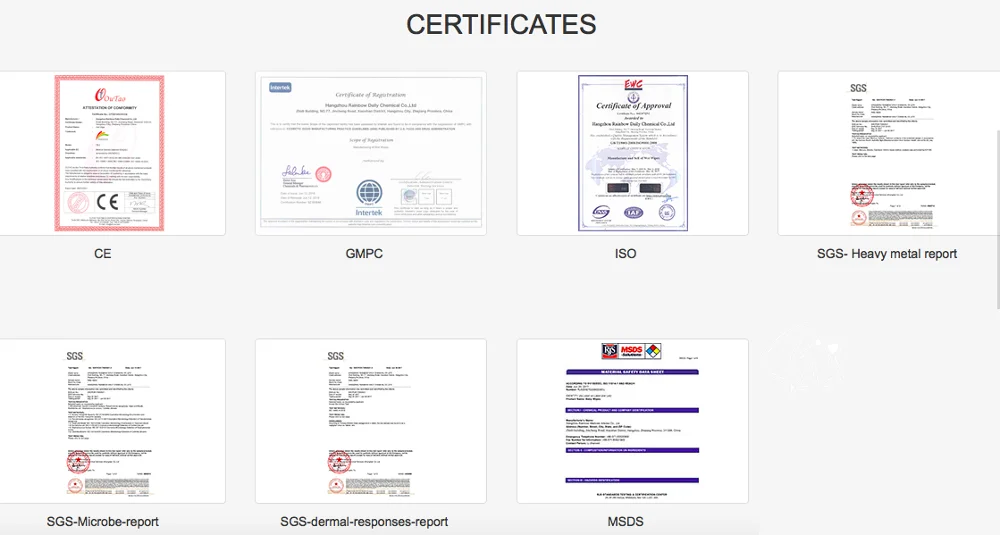
Certificates
Company Profile

Hot Tags: oem 100% flushable biodegradable body wet wipes for skin cleansing, China oem 100% flushable biodegradable body wet wipes for skin cleansing manufacturers, suppliers, factory, Soft Wet Cleaning Wipes for Face, Facial Cleanser Wipes for Sensitive Skin, Moisturizer Wipes, Wet Tissue Makeup Remover, Best Facial Cleanser Wipes


