


Face Makeup Wipes: Why the Face Needs a Different Substrate Specification
A face makeup wipe is not a body wipe cut smaller. The face has thinner stratum corneum than the torso, a higher density of sebaceous glands, and the eye area within a few centimetres of where the wipe passes. That geometry changes the substrate requirement: the wipe has to be soft enough not to drag across the eyelid, low-lint enough not to leave fibre on the cheek, and wet-strong enough to survive a mascara pass without tearing-while the lotion stays at a pH the face tolerates daily. We produce face makeup wipes at 45–60 gsm spunlace nonwoven, the range the category standardises on, in 70/30 viscose-polyester or 100% viscose, with a pH 5.0–6.0 lotion and an ophthalmologist-tested option for eye-area claims.
This page is a substrate-and-safety specification for buyers building a facial wipe line: what GSM, fibre blend, texture, and eye-area test package the face actually requires, and where the face-specific regulatory surface differs from a general wet wipe. For the remover chemistry decision-micellar versus bi-phase oil versus water-based-the Makeup Remover Wet Tissue page covers that separately; for the oily-skin variant, see Makeup Wipes For Oily Skin.
The 45–60 gsm Window and Why It Matters
Below 45 gsm: Too Thin for the Mascara Pass
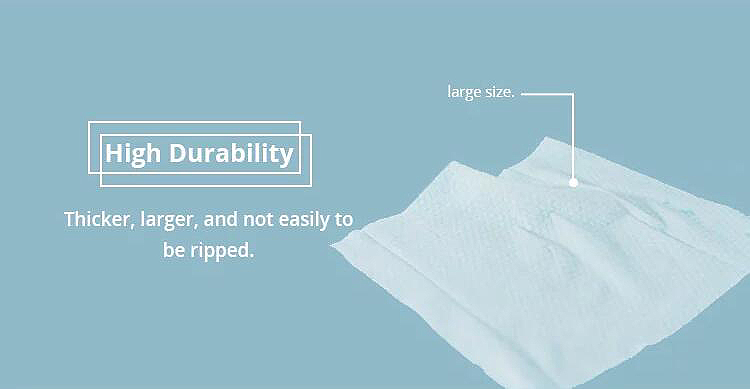
Baby and hand wipes commonly run 35–45 gsm because the wiping task is low-friction and the wipe is used across a small area. A face makeup wipe at that weight can work for a light micellar pass over foundation, but it tends to buckle, twist, or shed fibre when the user works along the lash line. The face-wipe category standardises higher-commonly 45–60 gsm for makeup removal-because the substrate has to hold its shape under the extra friction of eye makeup without becoming stiff enough to drag.
Above 60 gsm: Diminishing Return on the Face
A heavier substrate carries more lotion and can feel more substantial, but on facial skin the extra weight does not improve the makeup-removal outcome once the wipe is already low-lint and wet-strong enough. A 70–80 gsm sheet can feel cloth-like on the hand yet release lotion more slowly, which reads as drier on the first pass across the eyelid. For a face wipe, 45–60 gsm is the practical working band; higher gsm belongs to body or makeup-pad formats where surface area and lotion load are the drivers.
The fibre blend matters as much as the GSM on the face. A 70/30 viscose-polyester spunlace at 50 gsm gives a balance of softness and wet strength that suits a daily face wipe; a 100% viscose at the same weight is softer but lower in wet strength, and may need to move to 55–60 gsm if the wipe is used for waterproof eye makeup. The blend should be specified with the GSM and the makeup type, not chosen from a catalogue default.
Face-Specific Substrate Selection
| Specification | Face Wiper Range | Why It Differs from a Body Wipe | Test to Confirm |
|---|---|---|---|
| GSM | 45–60 gsm | Balances eye-area softness with wet strength for a mascara pass; body wipes run 55–80 gsm for larger surface area and faecal load | Wet tensile on the saturated sheet at the specified wipe size |
| Fibre blend | 70/30 viscose-PET or 100% viscose | Viscose-dominant for softness and low lint; polyester fraction only for wet strength, not stiffness | Lint release and hand-feel panel |
| Lint level | Low; minimal fibre shedding | Fibre on the eyelid or under the eye is visible and unacceptable on a bare face | Visual lint assessment after a standard wipe pass |
| Texture | Plain or light pearl; mesh only for heavy foundation | Textured surfaces increase friction on the eyelid; a plain surface is the default for daily eye-area use | Friction and drag assessment on the eye area |
| Wet strength | Sufficient for a full-face pass without tearing | Body wipes are specified against a soiled-surface load; face wipes against a makeup-friction load | Saturated wet tensile at the specified dimension |
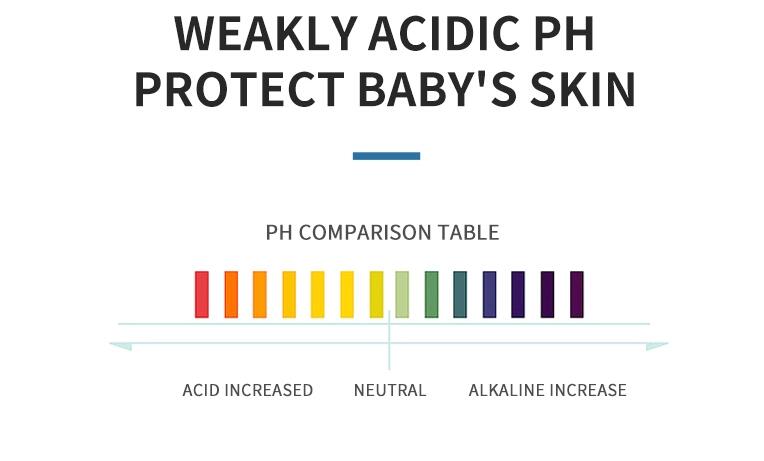
| pH | 5.0–6.0 | Eye area is more permeable and more sensitive to pH shift than the torso | Lotion pH at batch release and on stability |
The substrate decision is not a single "softest available" ranking. A 45 gsm 100% viscose wipe and a 55 gsm 70/30 blend can both be appropriate face wipes for different makeup loads and different price points; the specification that matters is whether the saturated sheet survives the intended eye-area pass without shedding or dragging. For the oily-skin variant, which may specify a slightly different surfactant system and a non-comedogenic claim, see Makeup Wipes For Oily Skin.
Eye-Area Safety: What "Ophthalmologist Tested" Has to Cover
The eye area is the part of the face where a face wipe claim is most exposed. A wipe marketed for eye makeup removal is used on the eyelid, the lash line, and the skin within a centimetre of the ocular surface, and the lotion residue stays there after the wipe passes. "Ophthalmologist tested" is not a single test; it is a claim that should be backed by a defined evaluation, and the buyer should ask which one.
Ophthalmological Evaluation
An ophthalmologist examines the eye-area response to the finished wipe or expressed lotion, typically assessing hyperaemia, oedema, erosion, and lacrimation. This is the evaluation that most directly supports an eye-area claim for a wipe.
HRIPT / Patch Testing
Human Repeat Insult Patch Testing evaluates skin sensitisation on the upper arm or back over a 3-week induction period plus a challenge. It supports a hypoallergenic or sensitive-skin claim, but it does not by itself establish eye-area tolerance.
Dermatologist Testing
Dermatological evaluation supports a skin-compatibility claim for the face generally. For a wipe used around the eyes, the dermatologist report is necessary but not sufficient; the ophthalmological evaluation is the eye-specific evidence.
If your label will carry "ophthalmologist tested" or "safe for the eye area," include that wording and the test protocol your retailer requires in the inquiry. A general dermatologist report on the lotion is not the same evidence as an ophthalmological evaluation of the finished wipe, and the two should not be used interchangeably on a pack. For the fragrance-free specification that many eye-area programmes require, the Feminine Wipes No Fragrance page covers the fragrance-claim documentation logic, which applies across facial and intimate formats.
Technical Specifications
| Parameter | Specification |
|---|---|
| Product Type | Face makeup wipes / facial cleansing and makeup-removal wipes |
| Substrate | Spunlace nonwoven; 70/30 viscose-polyester or 100% viscose; plant-based option available |
| Fabric Weight | 45–60 gsm (customizable) |
| Wipe Size | 15 × 20 cm / 18 × 20 cm / 20 × 20 cm; custom dimensions |
| Surface Texture | Plain, light pearl, or mesh (mesh for heavy foundation only) |
| Lotion pH | 5.0–6.0 |
| Alcohol | Free |
| Fragrance | Fragrance-free or mild fragrance |
| Lint Level | Low; specified for visible facial use |
| Eye-Area Testing | Ophthalmologist evaluation available on the finished wipe |
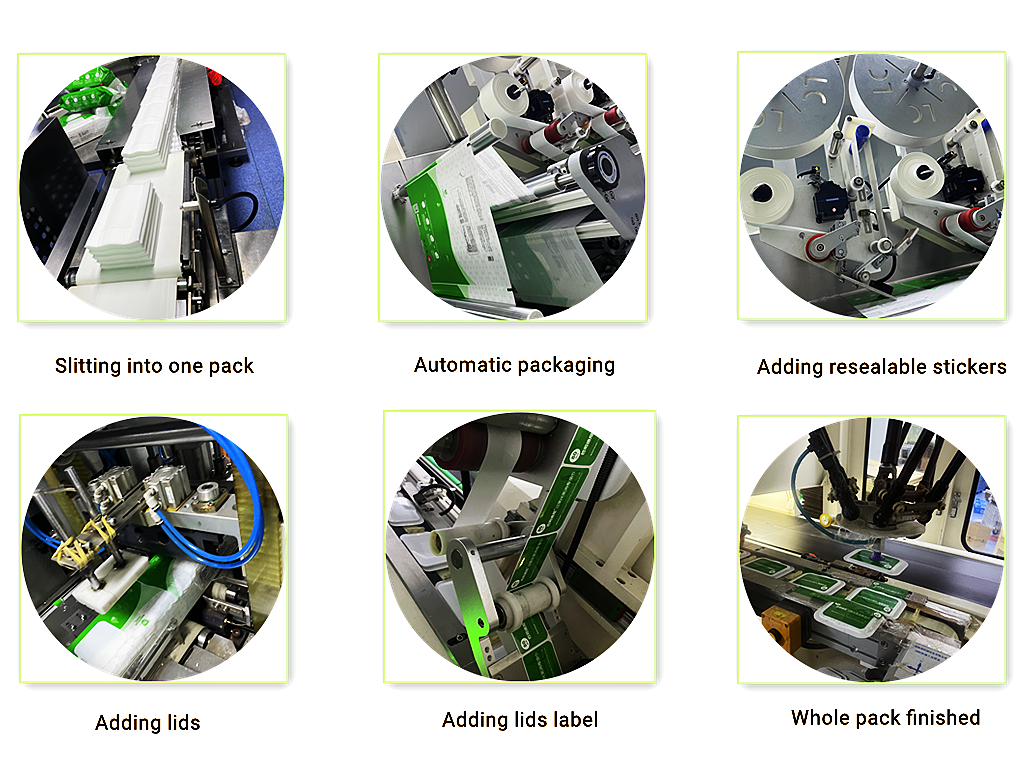
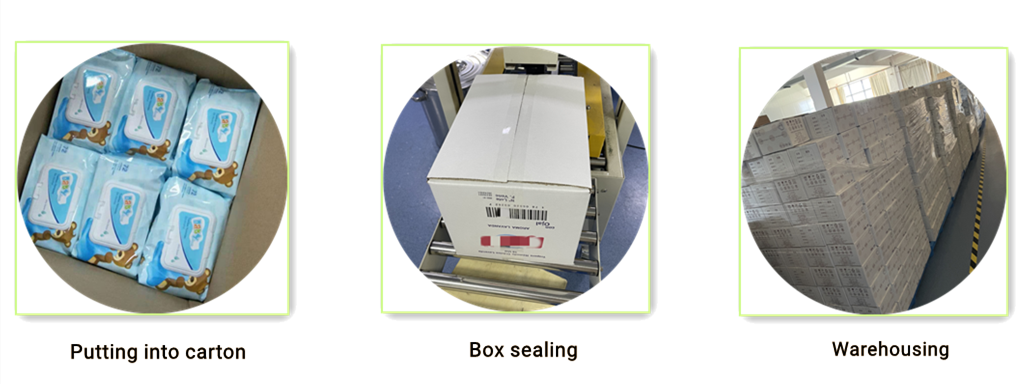
| Packaging | Soft pack with resealable sticker or flip-top lid; 25 / 50 / 80 ct; sachet option |
| Shelf Life | 24 months unopened, confirmed by stability testing per formula |
| Manufacturing Standards | ISO 9001 / GMP-aligned; ISO 22716 for cosmetic-route programmes |
| Regulatory Route | EU Cosmetics Regulation; US cosmetic route under MoCRA |
Wipe size, GSM, and texture are confirmed together. A 15 × 20 cm plain wipe at 45 gsm and a 20 × 20 cm pearl-textured wipe at 55 gsm serve different makeup loads and different pack formats, even when the lotion is the same. The wet strength and lint level should be verified on the finished saturated wipe at the specified dimension.
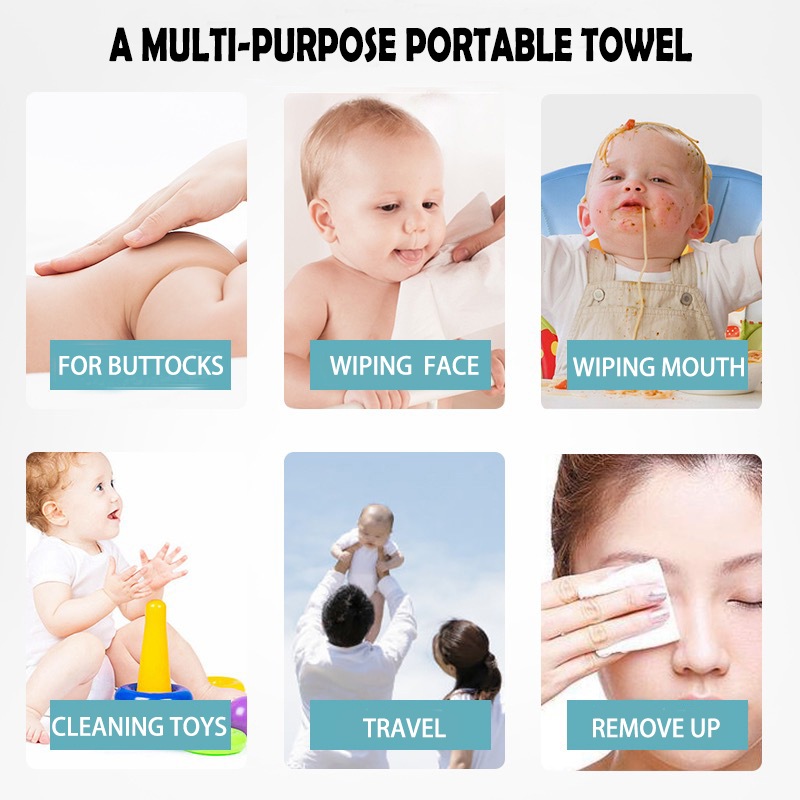
Where Face Makeup Wipes Are Used
Daily Facial Cleansing
For foundation, powder, sunscreen, and light eye makeup at the end of the day. A 45–55 gsm plain wipe with a micellar or mild surfactant lotion is the standard specification; the low-lint surface keeps fibre off the cheek after the pass.
Eye Makeup Removal
For mascara, eyeliner, and eye shadow, the wipe must be soft enough not to drag the eyelid and wet-strong enough not to tear along the lash line. An ophthalmologist-tested formula is the appropriate evidence route for a pack claim; a mesh or heavy texture should be avoided in this use.
Travel, Gym, and Post-Workout
For a full-face refresh where a sink is not available. Individually sealed sachets and 25-count packs suit a handbag or gym bag; the same 45–55 gsm substrate can be carried across both pack formats with the fold adjusted.
For the oily-skin formulation with oil-control actives and a non-comedogenic claim, see Makeup Wipes For Oily Skin. For the compostable substrate route with a makeup-removal formula, the Compostable Makeup Remover Wipes page covers the certification interaction separately. For the broader general-purpose facial cleansing wipe, Wet Tissue Remover Makeup is the adjacent specification.
Face-Specific Regulatory Surface: EU Allergen Labelling vs. US MoCRA
Face makeup wipes sit on the cosmetic side of the regulatory line in both the EU and the US, but the labelling obligations differ in a way that affects the artwork and the documentation set. In the EU, a leave-on cosmetic wipe must declare fragrance allergens from the expanded list-over 80 individual substances-when they exceed 0.001% in the finished product. A "fragrance-free" claim on an EU pack therefore does not remove the obligation to check whether any fragrance allergen is present above threshold from a non-fragrance ingredient; it only confirms that nothing was added for scent.
In the US, FDA does not have authority to require allergen labelling for cosmetics in the same way, and the whole fragrance blend may be declared as a single "Fragrance" entry. The practical consequence for a face-wipe programme selling into both markets is that the EU artwork needs an allergen review against the formulation, while the US artwork can carry a simpler fragrance declaration. Under MoCRA, the facility that manufactures or processes the wipes must register with FDA, name a US agent, and renew the registration biennially; the responsible person also carries product listing and adverse-event reporting obligations. The same cosmetic wipe shipped to both markets therefore has two documentation tracks even when the formula and substrate are identical.
The "fragrance-free" claim is a composition claim, not a smell test. A fragrance-free face wipe can still smell faintly of the base materials, and a masking fragrance added to neutralise odour is still a fragrance for labelling purposes. If your pack will carry "fragrance-free," the formulation declaration and the EU allergen review should be part of the specification, not a post-artwork check.
OEM, Documentation, and Order Details
What We Customize
- Substrate: 45–60 gsm spunlace; 70/30 viscose-PET or 100% viscose
- Texture: plain, light pearl, or mesh (mesh restricted to heavy-foundation formats)
- Wipe size: 15 × 20 cm to 20 × 20 cm, or custom
- Lotion: pH 5.0–6.0, alcohol-free; fragrance-free or mild fragrance
- Eye-area testing: ophthalmologist evaluation on the finished wipe for eye-area claims
- Packaging: soft pack, flip-top lid, or sachet with your artwork
Order Reference
- MOQ: from 10,000 packs per SKU for standard formats; confirm against pack type and customization level
- Samples: specification-matched samples against your target GSM, texture, and eye-area test requirement
- Documentation: lotion pH and stability records; ophthalmologist or dermatologist reports where the label carries the corresponding claim; EU allergen review for EU-destined artwork
- Production time: first order typically several weeks after sample and artwork approval; repeat orders shorter
- Quality control: incoming substrate GSM and fibre blend, lint level, lotion pH per batch, saturated wet tensile, seal integrity, and finished-pack count
If your label will carry "ophthalmologist tested," "safe for the eye area," or "fragrance-free," include the exact wording and the destination market so the test scope and the allergen review are confirmed before quotation. A face wipe for daily micellar use and an eye-makeup remover with an ophthalmologist-tested claim are different specifications with different evidence packages, not two labels on the same substrate.
Frequently Asked Questions
Face makeup wipes are commonly specified at 45–60 gsm, while baby and hand wipes often run 35–45 gsm. The difference is the wiping task: a face wipe has to survive the friction of a mascara pass along the lash line without tearing or shedding fibre, and a 35–40 gsm substrate can buckle under that load. Above 60 gsm, the extra weight does not improve makeup removal on the face and can slow lotion release, making the first pass feel dry. The 45–60 gsm band is the practical working range for a face wipe.
It should require an ophthalmological evaluation of the finished wipe or the expressed lotion, assessing parameters such as hyperaemia, oedema, erosion, and lacrimation on the eye area. A dermatologist report or an HRIPT patch test on the upper arm supports a skin-sensitisation claim, but it does not establish eye-area tolerance. If your label says "ophthalmologist tested," ask for the report that covers the finished wipe under eye-area conditions, not only a lotion safety assessment. We confirm the test scope against the exact label wording before sampling.
Neither is universally better; the choice depends on the makeup load and the pack format. A 100% viscose substrate is softer and lower in lint, which suits a daily micellar wipe used around the eyes. A 70/30 viscose-polyester blend gives higher wet strength at the same gsm, which helps when the wipe is used for waterproof mascara or a heavier foundation. If the 100% viscose route is chosen for eye makeup, the GSM may need to move to 55–60 gsm to hold the wet strength at the lash line. We confirm the blend and the GSM together against the intended makeup type.
Yes. In the EU, a leave-on cosmetic wipe must declare fragrance allergens from the expanded list when they exceed 0.001% in the finished product, regardless of whether the product carries a "fragrance-free" claim. A fragrance allergen can enter from a non-fragrance ingredient, such as a botanical extract or a preservative component, so the formulation still needs an allergen review before the EU artwork is approved. The "fragrance-free" claim confirms that nothing was added for scent; it does not remove the labelling obligation.
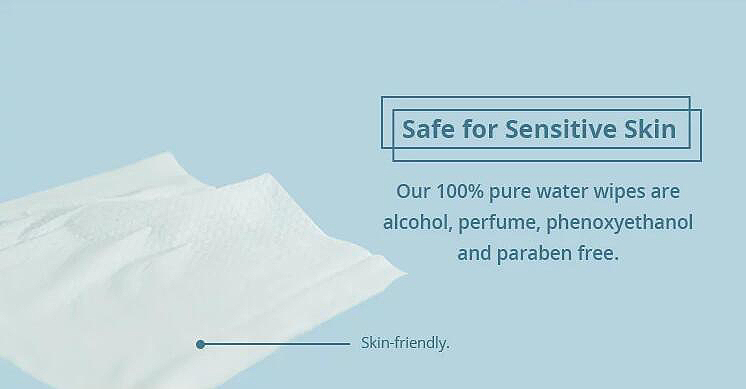
A face wipe formulated without alcohol, fragrance, and harsh surfactants is the appropriate starting specification for contact-lens wearers and sensitive eyes, and an ophthalmologist-tested version provides the supporting evidence if the pack carries that claim. The substrate should be plain rather than mesh-textured in the eye area, and the lotion should be pH 5.0–6.0 to avoid the stinging associated with an alkaline shift. If the label will target contact-lens wearers specifically, confirm the eye-area test scope against that wording before sampling.
A face makeup wipe is regulated as a cosmetic in the US, and under MoCRA the facility that manufactures or processes it must register with FDA, name a US agent, and renew the registration biennially. The responsible person also carries product listing and adverse-event reporting obligations. MoCRA does not require pre-market approval of cosmetic ingredients other than colour additives, but the facility registration and product listing are enforcement points. We confirm the facility registration status and the documentation set against the destination market before quotation.
Send Your GSM, Eye-Area Claim and Pack Format for a Matched Quote
Tell us the intended makeup load (daily, waterproof eye makeup, or heavy foundation), the GSM and fibre blend you have in mind, the eye-area claim your label will carry, the pack format and count, and your destination market. We will reply with a workable face-wipe specification, sample availability, and the test documentation set for your retail or brand review.
Get a Face Makeup Wipe Sample & Quote
If your label will carry "ophthalmologist tested," "safe for the eye area," or "fragrance-free," include the exact wording so the test scope and the EU allergen review are aligned before sampling.



Hot Tags: face makeup wipes, China face makeup wipes manufacturers, suppliers, factory, Wet Tissue Makeup Remover, Soft Wet Cleaning Wipes for Face, Facial Cleanser Wipes for Sensitive Skin, Best Facial Cleanser Wipes, Moisturizer Wipes


