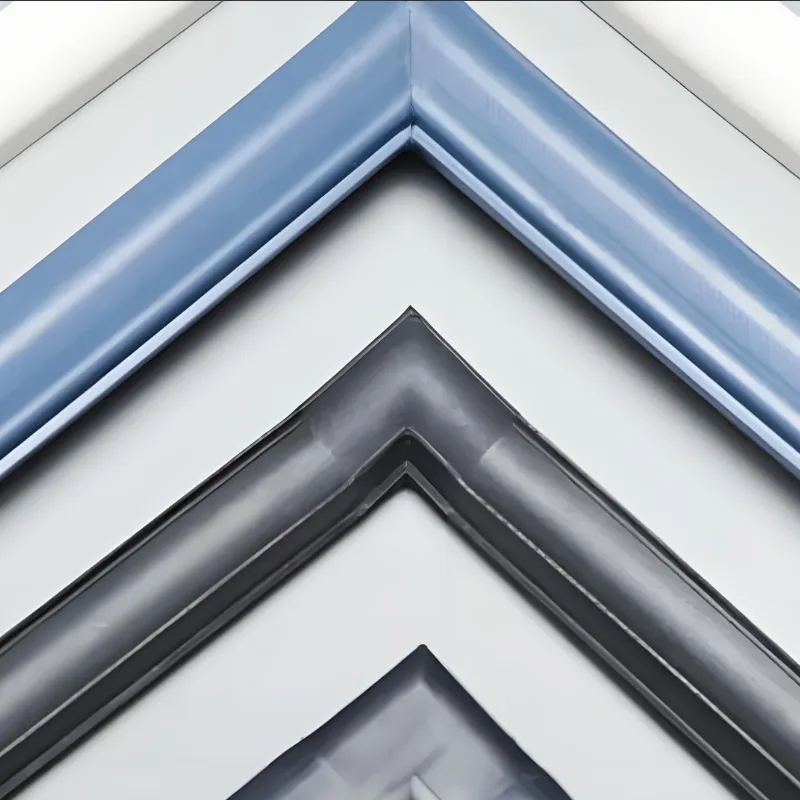
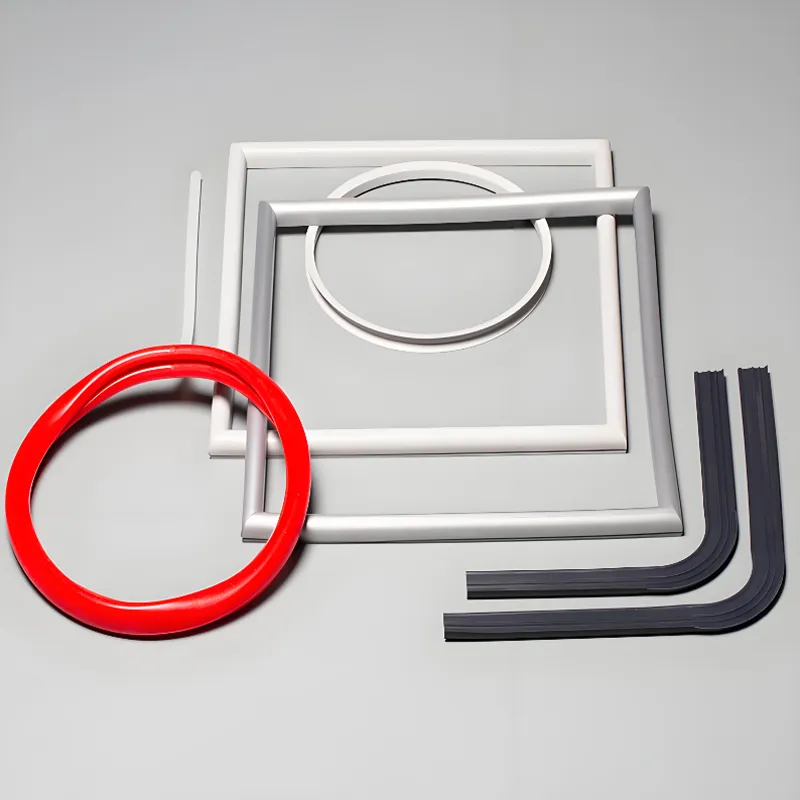
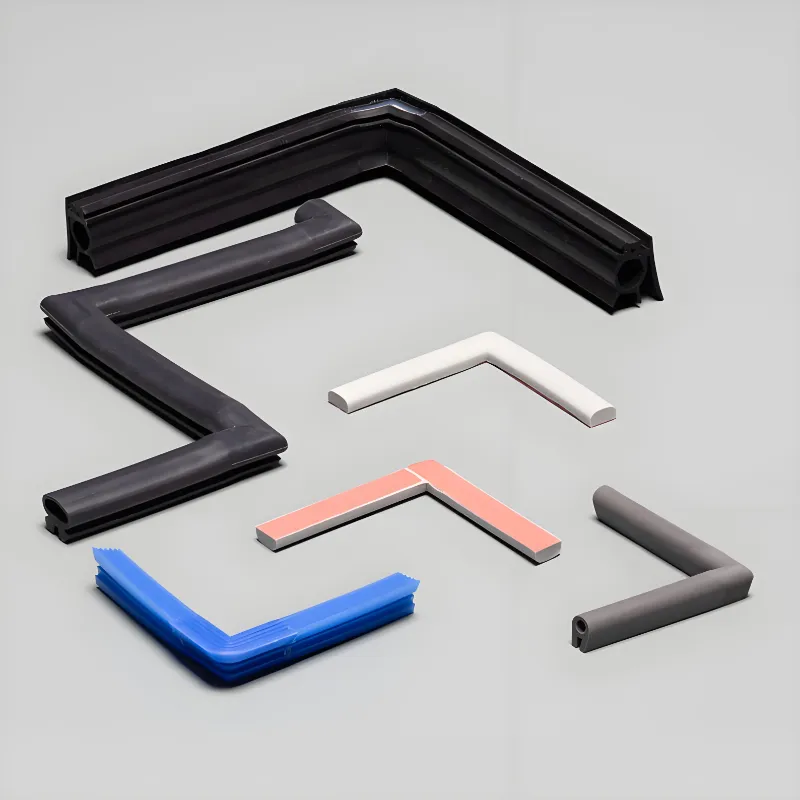
We specialize in the custom production of vulcanized seals, precisely manufactured according to your specifications. Our expertise covers a wide range of configurations, including:
Closed Loop Joints: Simple face joints formed into seamless, closed loops.
Multidimensional Frames: Joints at any angle, crafted into complex frame shapes.
Diverse Profile Combinations: Joining multiple silicone profiles into one integrated solution.
Flat and Thick Elements: Custom silicone sheets of any desired thickness.
Why Choose Our Vulcanized Seals?Custom Vulcanized Seals Tailored
Our commitment to quality ensures joints without necking or flashes, providing a smooth and durable finish. This meticulous craftsmanship has earned the trust of contractors across Europe, making our vulcanized products the top choice for high-precision sealing solutions.
FAQs for Custom Vulcanized Seals
1. Q: What exactly are custom vulcanized seals and what makes them different from standard extruded seals?
A: Custom vulcanized seals are precisely engineered sealing components that are molded and cured (vulcanized) under heat and pressure to create a specific, often complex, shape. Unlike standard extruded seals, which have a continuous profile, vulcanized seals are tailored to form seamless, closed-loop rings, intricate geometries, and parts with varying cross-sections. The vulcanization process creates stronger molecular bonds, resulting in superior tear strength, compression set resistance, and overall durability. This makes them ideal for applications where a precise, robust, and seamless seal is critical.
2. Q: What are the primary advantages of investing in custom-tailored vulcanized seals over off-the-shelf options?
A: The advantages are significant for performance-driven applications:
Perfect Fit & Function: They are engineered to your exact specifications, ensuring optimal sealing performance in your unique housing or assembly, eliminating gaps or weak points.
Seamless Construction: For O-rings and gaskets, a seamless, molded design provides uniform strength and eliminates the failure point of spliced ends.
Material Superiority: The vulcanization process enhances the physical properties of the base elastomer (like EPDM, Silicone, or Nitrile), leading to better heat resistance, chemical resistance, and long-term elasticity.
Cost-Effectiveness: While the initial tooling cost may be higher, a perfectly tailored seal reduces assembly time, prevents costly leaks, and minimizes downtime, offering a superior return on investment over the product's lifecycle.
3. Q: What is the typical process for designing and manufacturing a custom vulcanized seal?
A: Our process is collaborative and engineered for success:
Consultation & Requirements Gathering: We discuss your application's requirements, including temperature range, chemical exposure, pressure, and spatial constraints.
Design & Material Selection: Our engineers help finalize the seal design and select the optimal elastomer compound (e.g., Fluorosilicone for fuel resistance, EPDM for weather resistance).
Tooling & Prototyping: We create custom molds tailored to your part. Prototypes can often be supplied for validation.
Production & Vulcanization: The raw rubber is placed in the mold and subjected to precise heat and pressure, permanently setting the shape and enhancing its properties.
Quality Control & Delivery: Every batch undergoes rigorous inspection to ensure it meets your specifications before shipment.
4. Q: What materials are available for custom vulcanized seals, and how do I choose the right one?
A: We offer a wide range of specialty elastomers to meet diverse operational challenges. Common materials include:
EPDM: Excellent for outdoor/weather applications with superior ozone and UV resistance.
Silicone: Ideal for extreme high and low-temperature environments and food-grade applications.
Nitrile (NBR): The standard for oil and fuel resistance in industrial and automotive settings.
Fluorocarbon (Viton®/FKM): Provides exceptional resistance to high temperatures and aggressive chemicals.
Neoprene: A good all-purpose rubber with moderate resistance to oils, weather, and flames.
Our technical team will help you select the right material based on your specific needs for chemical compatibility, temperature range, and regulatory standards.
5. Q: What industries and applications most commonly use custom vulcanized seals?
A: Custom vulcanized seals are critical in industries where performance and reliability cannot be compromised. Key sectors include:
Aerospace & Defense: Seals for fuel systems, hydraulic actuators, and avionics bays that must withstand extreme conditions.
Automotive & Transportation: Engine gaskets, transmission seals, and specialized O-rings for electric vehicle battery packs.
Medical & Pharmaceutical: Biocompatible seals for diagnostic equipment, pumps, and disposable medical devices requiring high purity.
Industrial Machinery: Durable seals for hydraulic and pneumatic systems, fluid handling equipment, and heavy-duty processing machinery.
Energy & Oil & Gas: Seals for downhole tools, valves, and connectors that resist high pressure and aggressive media.
Hot Tags: epdm sealing strips for doors and windows, China epdm sealing strips for doors and windows manufacturers, suppliers, factory