


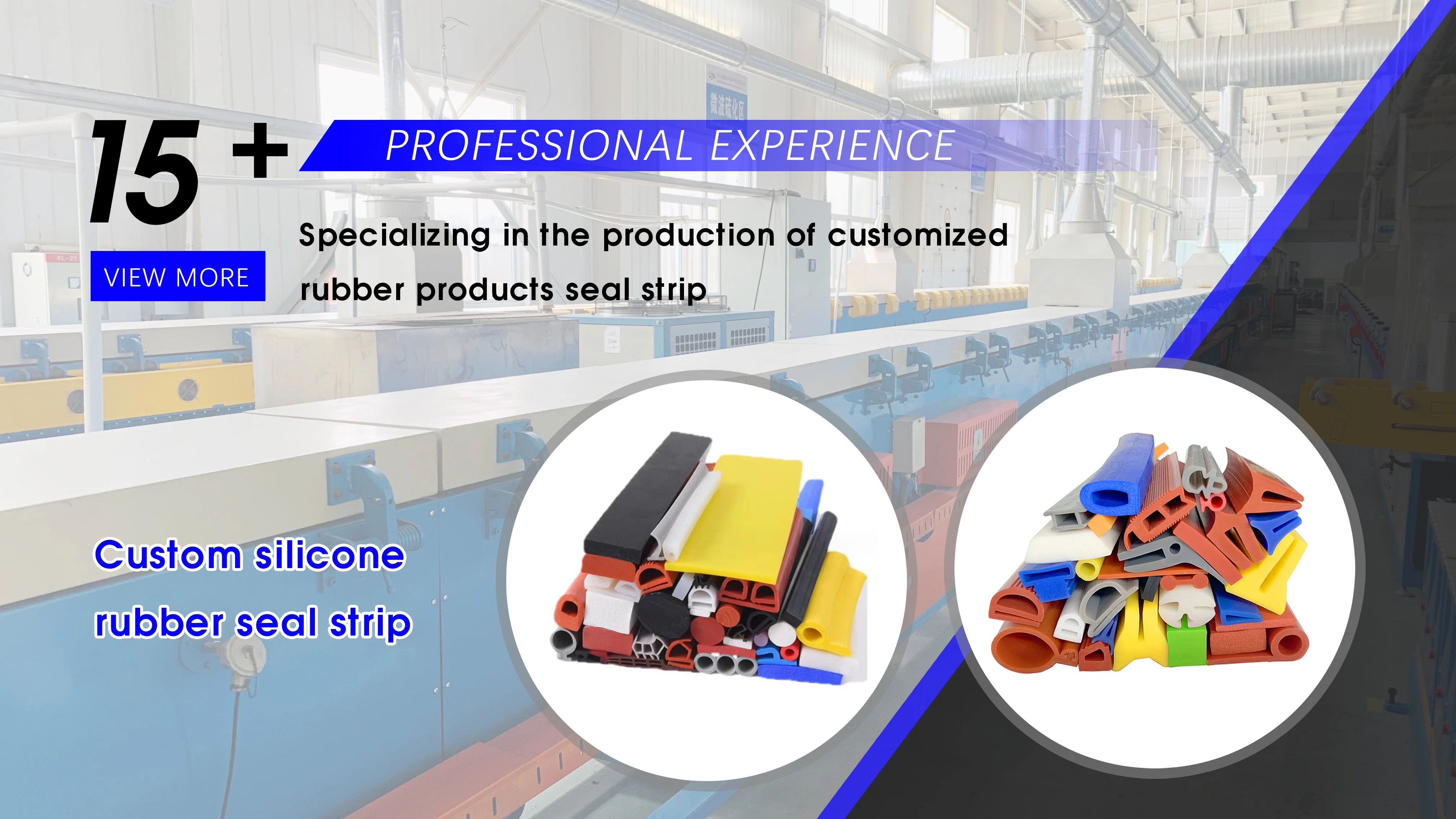
Chemical Resistant Silicone Rubber Seal For Aluminium Window And Door
Product Details:
| Place of Origin: | China |
|---|---|
| Brand Name: | Flexnite |
| Certification: | ISO 9001:2005, ISO 14001:2005, OHSAS 18001 |
Payment & Shipping Terms:
| Packaging Details: | General export packaging |
|---|---|
| Delivery Time: | 7-30 days |
| Payment Terms: | T/T, L/C |
Detailed Product Description
| Highlight: |
automotive door sealsrubber extrusions and seals |
||
|---|---|---|---|
Chemical Resistant Silicone Rubber Seal For Aluminium Window And Door
Quick Detail :
Excellent weather, ageing and chemical resistance
Supported by the polymer materials expertise available
in wood windows and doors, aluminium systems for windows, doors and facades, PVC windows and doors
1) Material: Silicone Rubber
2) Hardness: 40-80SHA
3) Silicone rubber seals have very good high-temperature and low-temperature resistance, ozone resistance, and chemical resistance. They also have lubricant surface. And various colors are available.
4) Customized profile and surface treatment is available
Products are widely used in wood windows and doors, aluminium systems for windows, doors and facades, PVC windows and doors.
We offer profiles from a comprehensive range of elastomer and thermoplastic materials including multi-component composite solutions.
Supported by the polymer materials expertise available, we can offer a full range of materials, surface treatments and fabrication techniques to suit almost every environment and application.
Using our extensive application knowledge coupled with state-of-the-art design and tooling technology, we can provide optimized sealing solutions to meet customer needs.
FAQs for Chemical Resistant Silicone Rubber Seal for Aluminium Window and Door
1. Q: Why is silicone rubber the best choice for a chemical-resistant seal on aluminium windows and doors?
A: Silicone rubber is uniquely suited for chemically harsh environments due to its inert molecular structure. It offers excellent resistance to a wide range of chemicals that typically degrade other elastomers, including ozone, dilute acids, alkalis, and oxidizing chemicals. This makes it ideal for aluminium windows and doors in laboratories, industrial plants, chemical processing facilities, and coastal areas where seals are exposed to corrosive salts, cleaning agents, or industrial pollutants. Its stability ensures the seal remains intact and functional, protecting the integrity of the building envelope.
2. Q: What specific chemicals can this silicone seal resist, and are there any limitations?
A: Our chemical-resistant silicone seals are formulated to perform exceptionally well against:
Oxidizing Agents: Ozone and chlorinated water.
Dilute Acids and Alkalis: Common in industrial atmospheres and cleaning solutions.
Salts and Seawater: Making it perfect for marine and offshore applications.
Alcohols and Ammonia.
Limitation: While highly resistant to polar substances, silicone is generally not recommended for continuous immersion in non-polar solvents like gasoline, benzene, or strong aromatic hydrocarbons. Always consult our chemical resistance chart for your specific chemical exposure.
3. Q: How does this seal perform in extreme temperatures while maintaining chemical resistance?
A: This is a key advantage. Our silicone seals maintain their chemical resistance and flexibility across a wide temperature range from -60°C to +225°C (-76°F to +437°F). Unlike EPDM or PVC, which can become brittle in cold or soften in heat, silicone's properties remain stable. This ensures that the seal continues to provide a reliable barrier against chemicals and weather, even in environments with significant thermal cycling, such as in foundries, food processing plants, or outdoor applications in extreme climates.
4. Q: How is this seal installed on aluminium frames, and is a special adhesive required?
A: Installation is straightforward and can be done in several ways:
Self-Adhesive: Many profiles come with a high-performance chemical-resistant acrylic adhesive backing for easy installation onto clean, dry aluminium surfaces.
Silicone Adhesive: For the most demanding applications or for bonding the seal itself, we recommend using a separate RTV silicone adhesive. This creates a chemical bond that is as durable as the seal material itself.
Mechanical Clips/Channels: Some profiles are designed to be pressed or clipped into dedicated grooves on the aluminium frame.
Proper surface preparation of the aluminium-cleaning with isopropyl alcohol-is crucial for a long-lasting bond.
5. Q: Is this chemical-resistant silicone seal safe for use in food, medical, or cleanroom environments?
A: Yes, but specification is critical. We offer specialized grades of our chemical-resistant silicone that are:
FDA Compliant: Suitable for incidental food contact.
USP Class VI Certified & ISO 10993 Tested: Meets stringent requirements for biocompatibility in medical and pharmaceutical applications.
Non-toxic and Low Volatility: Ideal for cleanrooms and sensitive electronic manufacturing areas where outgassing is a concern.
Please specify your regulatory requirements, and we will provide the appropriately certified material to ensure safety and compliance.
Hot Tags: chemical resistant silicone rubber seal for aluminium window and door, China chemical resistant silicone rubber seal for aluminium window and door manufacturers, suppliers, factory


