Makeup Wipes Without Alcohol: What Alcohol Did in the Formula, and How a No-Alcohol System Replaces It
"Alcohol-free" makeup wipes are usually sold as an exclusion claim: no ethanol, no isopropyl alcohol, therefore gentler. That claim answers what was removed, but not what replaced the function. Alcohol is not a decorative ingredient in a conventional makeup wipe. It performs at least three roles: it dissolves the oils, waxes, and film-formers in waterproof mascara and long-wear foundation, it supports the preservation system against microbial growth, and it provides a fast-drying, fresh skin feel. Remove the alcohol without rebuilding those three functions and the result is a wipe with weaker makeup removal, a narrower preservation margin, or a higher surfactant load used to compensate for the missing solvent-which can place more stress on the barrier than a low level of alcohol would have.
We produce makeup wipes without alcohol by reassigning alcohol's three functions in the formula: a glucoside and poloxamer micelle system carries the solvency role, a sodium benzoate and potassium sorbate or capryloyl glycine system carries the preservation support, and a 45–55 gsm viscose substrate with a controlled release profile carries the skin-feel role. The lotion is held at pH 5.0–5.5, with no ethanol or isopropanol added and a trace-audit of naturally occurring ethanol from raw materials, so the "alcohol-free" claim holds in substance rather than as a label word. This page is organised around the functional replacement logic; for the sensitive-skin reaction-source framework, the Sensitive Skin page covers that path separately, and for the eye-area CPSR and ophthalmologist evidence chain, see Facial Makeup Wipes.
The Three Functional Roles Alcohol Plays in a Wet Wipe
To judge whether a no-alcohol wipe has genuinely rebuilt the function, it helps to know what the alcohol was doing. The three roles carry different weight in different formulas, but a conventional alcohol-containing makeup wipe usually depends on at least two of them.
Dermatological literature is relatively consistent on alcohol's barrier effect: repeated exposure to high concentrations of ethanol disrupts intercellular lipids, raises TEWL, and reduces stratum corneum water content. But "contains alcohol" and "alcohol-free" are not a binary good-versus-bad judgment. A wipe with 5% ethanol and a wipe with 20% ethanol place different stress on the barrier, and a no-alcohol wipe built on a high-sulfate surfactant system can produce a larger TEWL increase than either. The value of a no-alcohol formula is that it moves the architecture away from dependence on a volatile solvent and toward micelles and mild surfactants-not that the exclusion claim replaces formulation engineering.
Functional Replacement Matrix: What Each Alcohol Role Becomes
| Alcohol's Original Function | No-Alcohol Replacement | Formulation Logic | Metric to Confirm |
|---|---|---|---|
| Dissolving oils and waxes / waterproof makeup | Glucoside (decyl glucoside, lauryl glucoside) plus poloxamer 184 micelle system | Micelles form a hydrophobic core in the water phase that traps oil and pigment without a volatile solvent; poloxamer provides a low-CMC stable micelle | Single-pass removal rate on waterproof mascara; gap versus an alcohol-containing control |
| Preservation support | Sodium benzoate plus potassium sorbate (pH below 6.0); or capryloyl glycine / undecylenoyl glycine with low-dose phenoxyethanol; or sodium levulinate with potassium sorbate | Uses the un-ionised form of organic acids to penetrate microbial cell membranes at acidic pH; naturally derived preservation systems can replace conventional preservatives in COSMOS-certified formulas | ISO 11930 challenge test pass on the finished saturated wipe; pH drift across shelf life |
| Fast-dry / fresh skin feel | Low-residue glucoside surfactant plus light glycerin (2–4%) and a lotion without heavy silicones; viscose substrate rather than a dense synthetic fibre | Skin feel is determined by surfactant residue, humectant ratio, and substrate release profile; lowering surfactant concentration and improving release uniformity avoids tackiness | Skin-feel score at 5 minutes after use (tack / residue / tightness); TEWL difference from baseline |
| Formula stability / solubilising actives | Glycols (propylene glycol or butylene glycol, if the exclusion list allows) or glycerin as co-solvent; avoid actives that require alcohol solubilisation | Some actives and preservatives need a co-solvent; a no-alcohol formula should select water-soluble or micelle-carried actives rather than forcing a glycol to replace all of alcohol's solvency | Active assay recovery at 40°C over 3 months; no precipitation or phase separation |
The central procurement judgment is that much of the price difference between no-alcohol wipes comes from which replacement path the supplier chose. Compensating for the missing alcohol with a high-concentration sulfate surfactant is cheap but carries a barrier cost. Building on a glucoside micelle system with a naturally derived preservation system costs more but is a formula that holds together. A supplier that answers only "we did not add alcohol," without answering what carries the makeup removal and what carries the preservation, has a formula and a claim that are not connected.
What "Alcohol-Free" Means in Regulation: Ethanol-Free Substance and the Free-From Boundary
Consumers Usually Mean Ethanol-Free
In a cosmetic context, "alcohol-free" is generally understood as free from ethanol. But INCI lists "Alcohol Denat." as the label name for denatured alcohol, with the denaturant not expanded on the label. That means a formula can contain no "Alcohol Denat." and still carry trace ethanol from a botanical extract, or use cetyl alcohol or cetearyl alcohol-which are alcohols in chemistry but not the volatile ethanol the consumer is concerned about. A responsible "alcohol-free" wipe should state clearly that the claim means ethanol-free and isopropanol-free, and that naturally occurring ethanol from raw materials has been trace-audited.
EU Free-From Claims Sit Under Six Common Criteria
Commission Regulation (EU) No 655/2013 requires all cosmetic claims to meet six common criteria: legality, truthfulness, evidential support, honesty, fairness, and informed decision-making. "Alcohol-free" as a free-from claim must be supportable by the product technical file, and in some member-state interpretations it must not denigrate a legally permitted ingredient. In practice, this means the technical file for an alcohol-free wipe should contain a declaration that no ethanol or isopropanol was added, a raw-material trace for ethanol content, and an INCI check confirming no Alcohol Denat. We prepare this documentation set for EU-destined no-alcohol wipes rather than printing a word on the front panel.
"Alcohol-free" does not mean "non-irritating." A no-alcohol wipe can still cause irritation through a high surfactant concentration, fragrance, or a sensitising preservative. Alcohol is only one irritation source, and removing it does not automatically make the formula gentle. If the pack carries both "alcohol-free" and "gentle," the two claims should have separate evidence: the former is a formula declaration and trace audit, the latter is an HRIPT or dermatologist test. Using one claim to support the other is a common gap in retail review.
Technical Specifications
| Parameter | Specification |
|---|---|
| Product Type | Makeup remover wipes without alcohol (cosmetic cleansing route; ethanol-free, isopropanol-free) |
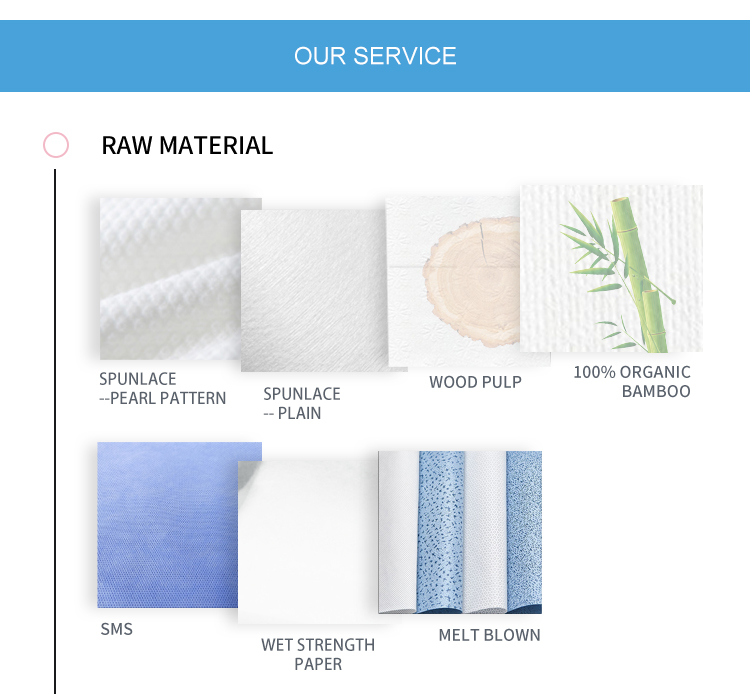
| Substrate | Viscose spunlace nonwoven; 45–55 gsm; plain or light emboss |
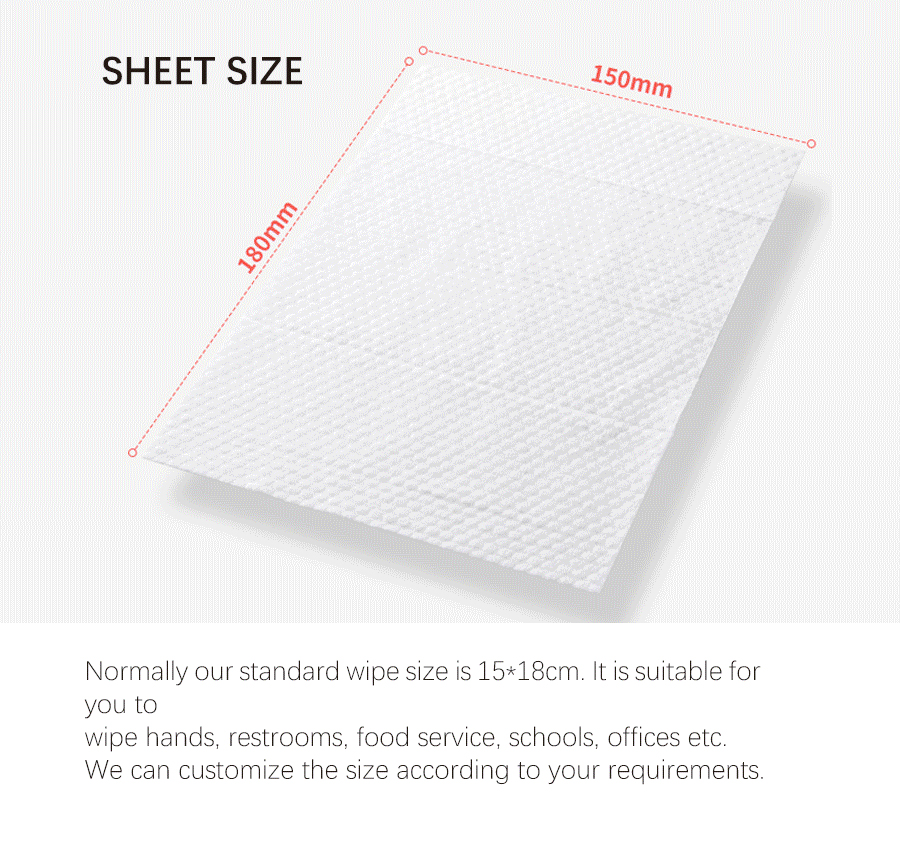
| Sheet Size | 15 × 20 cm / 18 × 20 cm; custom dimensions |
| Surfactant System | Glucoside-dominant (decyl/lauryl glucoside) with poloxamer 184 micelle assist; sulfate-free |
| Preservation System | Sodium benzoate + potassium sorbate (pH below 6.0); or capryloyl glycine / undecylenoyl glycine with low-dose phenoxyethanol; or sodium levulinate + potassium sorbate |
| Lotion pH | 5.0–5.5 |
| Ethanol / Isopropanol | Not added; naturally occurring ethanol trace-audited |
| Alcohol Denat. | Not present in the INCI list |
| Challenge Test | ISO 11930 pass on the finished saturated wipe |
| Efficacy / Tolerance Testing | TEWL versus baseline; optional HRIPT; waterproof mascara removal rate comparison |
| Packaging | Resealable soft pack, flip-top lid pack, or individually wrapped sachet; 25 / 50 / 80 ct |
| MOQ | From 10,000 packs per SKU for standard formats |
| Manufacturing Standards | ISO 9001 / GMP-aligned; ISO 22716 for cosmetic-route programmes |
The surfactant system, the preservation system, and the alcohol-free trace audit are one combined specification and cannot be specified separately. A formula built on glucoside surfactants but still dependent on a high-dose phenoxyethanol preservation system may face a second set of consumer exclusions beyond alcohol; a formula built on a naturally derived preservation system but with pH outside the organic-acid effective window may fail the challenge test. A no-alcohol quotation should be built on all three being confirmed together.
Who a No-Alcohol Formula Suits, and Where to Be Cautious
Where the No-Alcohol Positioning Fits
- Barrier-compromised or recovering skin: when the skin is already showing elevated TEWL, tightness, or flaking, removing volatile ethanol eliminates one avoidable barrier stressor. TEWL data is a more auditable support for this claim than the word "gentle."
- Frequent users: for a wipe used more than once a day, cumulative alcohol exposure matters more than for occasional use. Barrier friendliness under repeated use is part of the specification, not an afterthought.
- Clean-label retail channels: alcohol-free is a common exclusion in clean-beauty and pharmacy own-brand ranges, grouped with fragrance-free, sulfate-free, and paraben-free as a formula declaration set.
- Eye-area use: the periocular skin is thinner and closer to mucosal tissue, and volatile solvents produce a more noticeable sting. A no-alcohol, low-surfactant combination has a real tolerance advantage for eye makeup removal, but it still needs ophthalmologist testing to support an eye-area claim-the absence of alcohol does not derive that claim on its own.
Where a Different Specification May Be Needed
- Heavy or waterproof makeup: a purely water-based no-alcohol micelle system may remove waterproof mascara less completely in a single pass than an alcohol-containing or bi-phase oil formula. If the product is positioned as a heavy-duty waterproof remover, a bi-phase oil system rather than a water-based micelle system may be the right route. The Makeup Remover Wet Tissue page discusses that specification.
- High-water formulas with a tight preservation margin: removing alcohol's preservation support narrows the challenge-test margin. If the formula also requires paraben-free, MIT-free, and formaldehyde-releaser-free, the available preservation systems narrow further, and stability and challenge testing should be scheduled earlier.
- Brands with a strict alcohol-class exclusion: if the brand's exclusion list covers all fatty alcohols (cetyl alcohol, cetearyl alcohol, benzyl alcohol), the scope of "alcohol-free" expands from ethanol-free to alcohol-class-free, and the formulation toolkit narrows further. That definition should be confirmed before quotation, not assumed to be covered by "alcohol-free."
No-alcohol is not a universal claim. Its value lies in moving the formula from solvent dependence to a micelle, mild-surfactant, and organic-acid preservation architecture, and that move has defined performance boundaries. When comparing no-alcohol wipe quotations, a buyer should ask three questions at the same time: what is the waterproof makeup removal rate, does the challenge test pass on the finished wipe, and does the "alcohol-free" definition cover naturally occurring ethanol. A supplier that can answer all three is formulating; a supplier that answers only the first is labelling.
OEM, Documentation, and Order Details
What We Customize
- Surfactant system: glucoside-dominant or glucoside plus poloxamer; micelle size and makeup removal strength adjustable
- Preservation system: sodium benzoate/sorbate, capryloyl glycine system, or sodium levulinate system, selected against the target market's exclusion list
- Substrate: 45–55 gsm viscose spunlace; plain or light emboss
- Sheet size: 15 × 20 cm to 18 × 20 cm, or custom
- Packaging: resealable soft pack, flip-top lid pack, or individually wrapped sachet
- Claim scope: alcohol-free defined as ethanol-free plus isopropanol-free, expandable or narrower per brand requirement
Order Reference
- MOQ: from 10,000 packs per SKU for standard formats
- Samples: samples matched against your target surfactant and preservation system
- Documentation: no-alcohol formula declaration and raw-material ethanol trace; ISO 11930 challenge test on the finished wipe; TEWL comparison data if a barrier-friendly claim is made; waterproof makeup removal comparison if a removal claim is made
- Production time: first order typically several weeks after sample and artwork approval; repeat orders shorter
- Quality control: incoming substrate GSM, lotion pH per batch, challenge-test spot check on finished product, seal integrity, and finished-pack count
If the pack carries both "alcohol-free" and "gentle" or "for sensitive skin," provide the exact wording of both claims so the formula documentation and the test scope can be aligned separately. The no-alcohol formula declaration and the sensitive-skin tolerance test are two evidence sets and should not substitute for each other.
Frequently Asked Questions
It depends on the replacement path, not on the absence of alcohol itself. If the no-alcohol formula simply removes the alcohol and keeps the original low-surfactant system, makeup removal will drop. If the formula uses a glucoside plus poloxamer micelle system to carry the solvency function, the removal rate on daily foundation, sunscreen, and ordinary eye makeup can come close to a low-alcohol formula. For heavy waterproof mascara, a purely water-based no-alcohol micelle system is usually less effective in a single pass than an alcohol-containing or bi-phase oil system. The useful question is therefore not "is no-alcohol weaker" but "what carries the solvency role in this no-alcohol wipe, and for which makeup type." Testing and declaring the waterproof mascara removal rate is a more auditable specification than stating that removal is "equivalent."
This is the most frequently overlooked boundary in the alcohol-free claim. What consumers usually mean by alcohol-free is free from ethanol. If no ethanol or isopropanol is added but a botanical extract carries trace ethanol as part of its raw-material carrier, the wipe is not strictly zero-ethanol. A responsible supplier should trace-audit naturally occurring ethanol and state the difference between "no ethanol or isopropanol added" and "raw-material ethanol below a defined threshold." For the EU market, the free-from claim needs technical-file support for the wording on the pack; if the brand defines alcohol-free as absolutely zero ethanol, the raw-material selection must avoid ethanol-carrier extracts rather than blurring the distinction at the finished-product stage.
Alcohol provides some microbial inhibition in a wipe, but it is not the primary preservative. Remove it and the preservation load returns to the main preservative system. Common no-alcohol replacement paths include sodium benzoate plus potassium sorbate (within the organic-acid effective window at pH below 6.0), a capryloyl glycine or undecylenoyl glycine system with low-dose phenoxyethanol, and a sodium levulinate plus potassium sorbate combination for naturally derived positioning. Which path is selected depends on the brand's other exclusions (paraben-free, phenoxyethanol-free, MIT-free) and the certification requirements of the destination market. Whichever path is chosen, the ISO 11930 challenge test must be run on the finished saturated wipe, not only on the lotion-the substrate and moisture distribution change the preservation performance.
No. Alcohol is one avoidable irritation source, but gentleness also depends on surfactant concentration, fragrance, sensitising preservatives, and substrate friction. A no-alcohol wipe built on a high-sulfate surfactant system or containing fragrance can still cause irritation and a TEWL increase. Conversely, a wipe with a low level of alcohol but a mild surfactant system and no fragrance may be better tolerated by some users than a no-alcohol wipe with a high surfactant load. When a pack carries both alcohol-free and gentle, the two claims should have separate evidence: the former is a formula declaration and trace audit, the latter is an HRIPT or dermatologist test. Deriving one claim from the other is a common gap in retail review.
"Alcohol-free" is a free-from claim and falls under the six common criteria of Commission Regulation (EU) No 655/2013: legality, truthfulness, evidential support, honesty, fairness, and informed decision-making. That means the wording on the pack must be supportable by the product technical file, including a declaration that no ethanol or isopropanol was added, a raw-material ethanol trace, and an INCI check confirming no Alcohol Denat. Some member-state interpretations also require that a free-from claim does not denigrate a legally permitted ingredient. In practice, an EU-destined no-alcohol wipe should have this documentation set in the technical file rather than only a word on the front panel. If the brand also uses a "sensitive skin" claim, that is a separate evidence set and should not be mixed with the free-from formula declaration.