Biodegradable Wet Wipes: Matching Substrate Chemistry to the End-of-Life Claim
A biodegradable wet wipe is not a single specification. Viscose, bamboo, lyocell, wood pulp, and PLA each biodegrade at different rates and under different conditions, and the certification that supports an on-pack claim depends on the substrate chemistry, the lotion, and the disposal environment the claim names. A wipe made with plant-derived fibres may be plastic-free but not certified compostable; a compostable wipe may require industrial rather than home composting; and a flushability claim must be tested separately from biodegradability[reference:0].
We produce biodegradable wet wipes across baby, adult personal care, and general hygiene categories on the same Fujian converting lines, with 70%+ of our portfolio certified to OK Compost / EN 13432[reference:1]. This page is a buyer's entry point for selecting the right substrate and certification route before narrowing to a specific product format. For category-specific specifications, the Biodegradable Wipes range collects the individual SKUs, while the Compostable Wipes page covers the certified-compostable line.
What "Biodegradable" Covers - and What It Does Not
Biodegradable (unqualified)
Material can be broken down by biological processes. Without a named environment, timeframe, and test standard, the term is difficult to substantiate. The FTC Green Guides require a product marketed as biodegradable to break down completely and decompose into elements found in nature within a reasonably short time (one year) after disposal in an appropriate environment[reference:2].
Compostable (certified)
Meets a defined standard-EN 13432, ASTM D6400, or ISO 17088-for disintegration, biodegradation (typically ≥90% conversion to CO₂ within 180 days under industrial conditions), and ecotoxicity. Certification must cover the finished product, not only the raw fibre, for an on-pack compostability logo[reference:3].
Flushable (separately tested)
Dispersibility under the mechanical conditions of a drain line, tested to INDA/EDANA GD4 or an equivalent standard. A wipe can be biodegradable but not flushable, or flushable but not compostable. The two claims answer different questions and require different test reports[reference:4].
The claim your label makes must match the test you hold. "Biodegradable," "compostable," and "flushable" are not interchangeable on a pack, and a certification for one does not support the others. We confirm the disposal claim against the substrate and lotion before artwork approval, so the logo and the test report stay aligned.
Substrate Chemistry: How Each Fibre Biodegrades
| Substrate | Raw Material | Biodegradation Route | Wet Strength at Body-Wipe Load | Certification Typically Available |
|---|---|---|---|---|
| Viscose (regenerated cellulose) | Wood pulp | Cellulose hydrolysis; composts under industrial conditions | Moderate; 45–65 gsm for personal care | EN 13432 / OK Compost INDUSTRIAL |
| Bamboo fibre | Bamboo pulp | Cellulose-based; similar route to viscose | Moderate to good at 55–80 gsm | EN 13432 / OK Compost INDUSTRIAL; home-compost on selected blends |
| Lyocell | Wood pulp, closed-loop solvent | Regenerated cellulose; disperses rapidly under agitation | High initial wet strength; loses integrity in water[reference:5] | EN 13432; flushability testable to GD4 |
| Wood pulp (airlaid / wetlaid) | Softwood / hardwood pulp | Rapid disintegration; cellulose biodegradation | Lower; 35–50 gsm typical for flushable formats | Flushability (GD4); compostability depends on binder system |
| PLA (polylactic acid) | Corn / sugarcane starch | Industrial composting hydrolysis; not home-compostable in most grades | Good at 50–70 gsm; heat-sensitive in storage | EN 13432 / ASTM D6400 (industrial only) |
The substrate decision is not a single "most eco-friendly" ranking. Viscose and bamboo give the broadest lotion compatibility and certification coverage for personal-care wipes; lyocell is the route for a wipe that must combine usable wet strength with rapid dispersion; wood pulp suits flushable formats where disintegration speed matters more than cloth-like feel; PLA offers a plant-derived alternative to polyester but narrows the storage and lotion window. Our Personal Care Wipes line uses TÜV OK Compost INDUSTRIAL-certified plant fibres that decompose in 6–8 weeks under industrial conditions, leaving zero microplastics[reference:6].
Certification Landscape: Which Standard Supports Which Claim
Certification is the bridge between a substrate property and a marketable claim. The table below maps the main standards to the claim they support and the market where each is most commonly referenced. A buyer sourcing for multiple markets should specify the standard that matches the strictest destination, not the lowest common denominator.
| Standard | Claim Supported | Disposal Condition | Where Most Commonly Referenced |
|---|---|---|---|
| EN 13432 | Industrial compostable | Controlled industrial composting | EU harmonised reference for packaging and compostable products |
| ASTM D6400 | Aerobically compostable (industrial) | Municipal / commercial composting | US, via BPI certification |
| TÜV OK Compost INDUSTRIAL | Industrial compostable | Industrial composting | Europe; retailer and brand specification[reference:7] |
| TÜV OK Compost HOME | Home compostable | Domestic garden compost | Europe; stricter claim, narrower substrate window |
| INDA/EDANA GD4 | Flushable / dispersible | Municipal wastewater system | Global de facto flushability benchmark[reference:8] |
Two certification traps recur in buyer audits. First, a certificate for the raw nonwoven does not automatically cover the finished saturated wipe, because the lotion and the converting process can change the biodegradation behaviour. Second, a "biodegradable" claim without a named standard is increasingly restricted: the EU Green Claims Directive prohibits generic environmental claims, including "biodegradable," without adequate substantiation[reference:9]. The UK will prohibit the supply of plastic-containing wet wipes from May 2027, making substrate conversion a market-access issue for suppliers serving that market[reference:10].
Technical Specifications
| Parameter | Specification |
|---|---|
| Substrate Options | Viscose, bamboo, lyocell, wood pulp, PLA, or blended plant-based nonwoven |
| Fabric Weight | 30–80 gsm depending on format and application |
| Wipe Size | 150 × 200 mm / 180 × 200 mm standard; up to 18 × 30 cm for body formats; custom dimensions |
| Plastic Content | 0% for 100% plant-fibre substrates; blended substrates disclose the synthetic fraction |
| Biodegradability Certification | EN 13432 / ASTM D6400 / OK Compost INDUSTRIAL; OK Compost HOME on selected blends |
| Flushability Testing | INDA/EDANA GD4 on qualified flushable substrates; tested separately from compostability |
| Lotion Compatibility | Alcohol-free, pH 5.5–7.0 body-care lotions; surfactant-based cleaning lotions; optional aloe, vitamin E |
| Packaging Formats | Individual wrap, soft pack (10–120 ct), canister, refill pack, bulk carton |
| Shelf Life | Typically 18–24 months unopened, confirmed by stability testing per formula |
| Manufacturing Standards | ISO 9001 / GMP-aligned; ISO 13485 available for medical-adjacent formats |
Substrate, certification route, and pack format are confirmed against your destination market and intended disposal claim before production. A 35 gsm wood-pulp flushable substrate and a 70 gsm bamboo home-compostable substrate are not interchangeable specifications even though both may be described as "biodegradable" in loose marketing language.
Where Biodegradable Wet Wipes Fit Across Categories
Baby and Sensitive Skin
Plant-fibre substrates at 35–50 gsm with alcohol-free, pH-balanced lotion. The certification message resonates with parents and is a growing purchase driver in European and North American retail[reference:11]. For the aloe specification, see Aloe Vera Wet Wipes.
Adult Personal Care and Body
Larger formats at 55–80 gsm for rinse-free body cleansing. The substrate must hold wet strength at body-wipe dimensions while still meeting the compostability criteria. The Biodegradable Body Wipes page covers the size and certification trade-offs.
Flushable and Travel
Wood-pulp or lyocell blends at 35–45 gsm, tested to GD4 for dispersibility. Flushable wipes require a separate claim track from compostable wipes; the Flushable Wipes category covers the dispersibility specifications[reference:12].
For applications where the wipe also carries an antibacterial claim, the Biodegradable Antibacterial Wipes page addresses the substrate–active compatibility and eluate testing that this page does not cover. For a non-biodegradable adult personal-care baseline, see Personal Care Wipes.
Buyer Checklist: What to Confirm Before Locking a Specification
Substrate and Certification
- Named standard: which certification will appear on the pack, and does it cover the finished wipe or only the raw fibre?
- Disposal environment: industrial composting, home composting, or wastewater; the claim must name the environment
- Plastic fraction: if the substrate is a blend, what percentage is synthetic, and how is it disclosed on the label?
- Shelf-life stability: does the lotion or the active system affect biodegradation or wet strength over 18–24 months?
Market and Claim Compliance
- EU: Single-Use Plastics Directive marking requirements for plastic-containing wipes; Green Claims Directive substantiation for "biodegradable"[reference:13]
- UK: plastic-containing wet wipe supply prohibited from May 2027; confirm substrate conversion timeline[reference:14]
- US: FTC Green Guides require one-year complete decomposition in the stated disposal environment[reference:15]
- Retailer specification: many European retailers require TÜV OK Compost or EN 13432 as a listing condition, independent of statutory rules
If your programme spans multiple markets, specify the substrate and certification to the strictest destination. A single SKU certified to OK Compost HOME will generally satisfy industrial-composting requirements as well, while the reverse is not true. We confirm the certification scope against the exact substrate blend and the claim your artwork will carry before quotation.
Frequently Asked Questions
No. The term is used loosely, and the regulatory threshold varies by market. In the US, the FTC Green Guides require complete decomposition into natural elements within one year after disposal in an appropriate environment, but not every product marketed as biodegradable meets that test. In the EU, the proposed Green Claims Directive would ban generic "biodegradable" claims without adequate substantiation. The practical check is to ask for the named standard and the test report that covers the finished product, not only the raw material.
Not automatically. A certificate issued for the dry nonwoven confirms the substrate's behaviour in isolation. The finished wipe includes the lotion, preservatives, and any active ingredients, and these can change the disintegration and biodegradation profile. For an on-pack compostability logo, the certification should cover the finished saturated product under the stated conditions. We confirm the certificate scope against the exact formula before artwork approval.
Yes, but the two properties are tested to different standards and one does not imply the other. A wood-pulp or lyocell substrate can be engineered for rapid dispersion in water (tested to INDA/EDANA GD4) while also being biodegradable. A compostable viscose wipe, however, may biodegrade in soil or industrial compost while still being unsuitable for flushing, because flushability depends on dispersibility under drain-line shear. If your pack carries both claims, both test reports should be available.
There is no single answer, but viscose or bamboo certified to EN 13432 / TÜV OK Compost INDUSTRIAL is the mainstream route for personal-care wipes because it covers the widest range of lotion systems and retailer requirements. If your brand needs a home-compost claim, the substrate window narrows and the unit cost rises. If the product is a flushable toilet wipe, wood pulp or lyocell tested to GD4 is the relevant route. The substrate follows the disposal claim your artwork will carry, not the reverse.
The UK will prohibit the supply of plastic-containing wet wipes from May 2027, which makes substrate conversion a market-access requirement for suppliers serving that market rather than a brand-positioning choice. In the EU, the Single-Use Plastics Directive already requires marking and extended producer responsibility for plastic-containing wipes, and the proposed Green Claims Directive would restrict unsubstantiated "biodegradable" claims. Several European brands have completed or are completing reformulation ahead of these deadlines, and retailer specifications are moving faster than statutory rules in some markets.
Sometimes, but not always. Baby and adult personal-care wipes can often share a viscose or bamboo substrate family with different lotion and pack formats, which reduces changeover cost. Flushable wipes generally require a different substrate chemistry-wood pulp or lyocell engineered for dispersion-so they sit on a separate specification track. A supplier that treats all three as one substrate is compressing distinctions that carry different certification and test implications. We confirm which formats can share a substrate and which require a separate one before quoting.
Send Your Disposal Claim and Target Market for a Substrate Recommendation
Tell us the claim your pack will carry (biodegradable, industrial compostable, home compostable, or flushable), the wipe category, target fabric weight, pack format, estimated quantity, and destination market. We will reply with a substrate and certification route that matches the claim, sample availability, and a production timeline.
Get a Biodegradable Wet Wipe Recommendation
If your retailer or tender requires a specific certification-EN 13432, ASTM D6400, OK Compost HOME, or GD4-include that requirement so the substrate scope is confirmed before sampling.
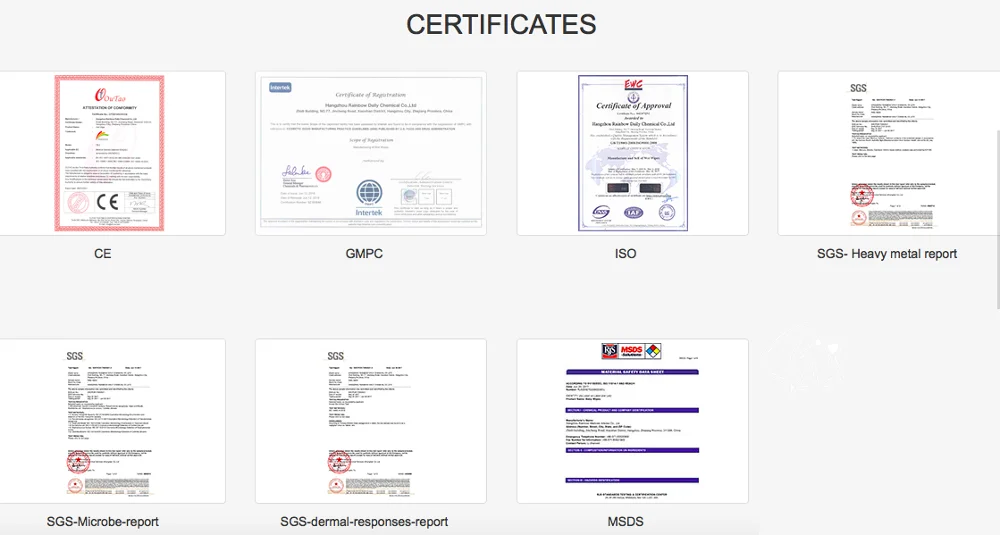
Certificates
Company Profile

Why choose us?
- Our team is passionate about providing our customers with the best possible Adult Wipes on the market.
- Actively suggest ideas at meetings and try to involve yourself in the company's decisions. It doesn't matter whether what you say is good or bad, because it is an important expression of personal responsibility and team consciousness, and an important way to exercise and improve your decision-making ability.
- We believe that every customer deserves only the best Adult Wipes, and that's what we provide.
- We always adhere to the tenet of 'survive by quality, innovation by technology, market-oriented, and user-oriented' to provide customers with high-quality products and first-class services. We wholeheartedly cooperate with new and old customers from all walks of life to create a brilliant future!
- We understand the importance of keeping surfaces clean, and our Adult Wipes are designed to do just that.
- The future growth power of our company will be the unique Biodegradable Wet Wipes created by our company, and at the same time, we will enhance our ability to penetrate the traditional international market.
- Our Adult Wipes are designed to be gentle yet effective on all surfaces.
- We hope that our employees will continue to break through themselves and improve the efficiency and effectiveness of their work through continuous learning and applying what they have learned.
- Our company provides professional services in addition to superior products.
- While our company has made brilliant achievements, we have always adhered to the goal of serving the community, complying with laws and regulations, and always taking education and charity as our goal of support.
Hot Tags: biodegradable wet wipes, China biodegradable wet wipes manufacturers, suppliers, factory, Antibacterial Wipes For Adults, Wet Wipes Without Alcohol, Alcohol Wipes 70 Percent, Amazon Prime Adult Wipes, Wet Wipes To Clean Body, Health Wipes For Adults